

Object ID
X65.9085
English designations
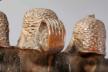
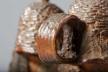
Pendant Plaque
Categories
Ceremonial Regalia
Location
308 Charles E Young Dr N, Los Angeles, CA 90024, United States
Loading...
Pendant Plaque
Pendant Plaque
Pendant Plaque
Pendant Plaque
Pendant Plaque
Pendant Plaque

Iconographies

10 annotations
Colar Bead
Odigba
Coral beaded collar

Odigba (coral-beaded collar) is a rigid neck collar made of coral beads, worn as part of ceremonial attire only by senior princes who have been made Enigie (Inneh 2007, p. 107). Although Ibafe (2007, p. 43) argued that the Odigba was introduced during the Ogiso period (c. 900–c. 1170 AD) by Ogiso Ere, along with other symbolically important Emwin Arhe, such as the Ada (ceremonial sword) and the Ẹbẹn (ceremonial sword), this seems unlikely, as coral was only introduced in the late 15th century through trade with Portuguese merchants.

1 annotation
Odigba
Ọba
King

The Ọba is the monarch of the Edo people and Kingdom. The current reigning monarch, Ọba Ẹwuare II, is the fortieth Ọba of the current dynasty, which is traditionally understood to have begun around 1170 AD ( ). Over the centuries, the role and conception of the monarch have shifted, and the Emwin Arre (royal treasures) and the visual language they carry provide important evidence for understanding these developments. Although Emwin Arhe served a variety of functions within court life and ritual, “their primary purpose was to glorify the godlike king and the history of the powerful empire” (Plankensteiner 2007, p. 25). Representations of the Ọba are therefore ubiquitous across Benin court arts and frequently occupy a central position within their visual language.

Representations of the Ọba can be recognised through a combination of characteristics, including his size, as he is usually depicted larger than other figures, and his position within compositions, where he may appear in front of or be supported by other figures, as in the Royal Triad motif. The Ọba is also distinguished by particular items of regalia, including the Oro projection from his crown, the distinctive beaded swag extending from his right hip, the Ewu ivie (coral-beaded shirt), and Ukpan obọ eva (crossed coral-beaded baldrics).

Since the early 20th century, scholars have sought to identify individual Ọbas represented on Emwin Arhe by analysing the regalia and other attributes of figures identified as monarchs, as well as the combinations of motifs and figures appearing on particular objects. Oral traditions and historical accounts, alongside European archival sources, have also played an important role in determining the identities of specific Ọbas (e.g., , ; ). Just as the institution of the monarchy developed and changed over time, so too did the ways in which Ọbas were represented by artists working within the royal guilds, including the Igun-Ẹrọnmwọn and Igbesamwan.

1 annotation
Ọba
Osa
Osa

“Only Osa and the Osuan know what is in the palm frond” (Inneh 2007, p. 113)

The title of Osa is paired with that of Osuan, and both titles were created by Ọba Ewuare I to protect the Ọba and the Edo people. The Osa worships the deity Uwen, who is associated with protection, healing, and the prevention of wounds, particularly during warfare (Inneh 2007, p. 113).

During ceremonies such as Ugie and Oduduwa, the Osa and Osuan support the Ọba on either side, a pose that is frequently reflected in the visual language of Emwin Arhe (royal treasures) (Blackmun 2007, cat. nr. 168, p. 167). Both are often depicted wearing basketry headwear with a pointed Oro projection, similar to the headwear still worn by holders of these titles today (Inneh 2007, fig. 8, p. 110).

During the Igue festival, the Osa and Osuan wrap raffia palm cloth around their waists, which “indicate[s] the deep secrecy of the inner details of the palace worship and Ugie ceremonies” (Inneh 2007, p. 113).

1 annotation
Osa
Osuan
Osuan

“Only Osa and the Osuan know what is in the palm frond” ( )

The title of Osuan is paired with that of Osa, and both were created by Ọba Ewuare I to protect the Ọba and the Edo people as a whole ( ). According to Inneh ( ), the Osuan is responsible for Ora, the deity associated with fertility. The Osuan is therefore responsible for ensuring the fecundity of the land and people of the Kingdom ( ).

During ceremonies such as Ugie and Oduduwa, the Osa and Osuan support the Ọba on either side, a pose that is frequently reflected in the visual language of Emwin Arhe (royal treasures) ( ). Both are often depicted wearing basketry headwear with a pointed Oro projection, similar to the headwear still worn by holders of these titles today ( ). The Osuan, as well as other members of the Ooton guild to which the titleholder belongs, are often depicted holding an Unwẹnrhiẹnọtan (switch) in one or both hands. This pose reflects the historical role of the Osuan during sacrificial ceremonies, when the Unwẹnrhiẹnọtan was held aloft to “fend off intrusive spirits that crowded around as the victim died” ( ).

During the Igue festival, both the Osa and Osuan wrap raffia palm cloth around their waists, which “indicate[s] the deep secrecy of the inner details of the palace worship and Ugie ceremonies” ( ).

1 annotation
Osuan
Iviawẹ
Stacked Beaded Anklet

Ọba gha ye Ivie gie ọwan, ẹ ghi tama rẹn ehe nọ gha bae yi (When the Ọba gifts you a bead, he doesn’t tell you how to wear it) (Daniel Inneh, pers. comm., 27 September 2025).

Iviawẹ (also spelled ĺvîowẹ) are coral-beaded anklets, often worn stacked together (Aigbe 1985, p. 28; Okpokunu, Agbontaen-Eghafona & Ojo 2005, p. 162; Ọbazee 2025, p. 279). Many of the figures depicted on the Emwin Arhe (royal treasures) in brass, bronze, ivory, and wood are shown wearing these. According to Daniel Inneh (pers. comm., 27 September 2025), beads were sent to people whom the Ọba wished to honour, although there was no directive on how to wear them.

Mostly, people who wear Iviawẹ are identified as palace chiefs or priests and priestesses. However, today anyone can wear them as cultural identifiers or fashion pieces.

1 annotation
Iviawẹ
Oro
Headdress/crown with single projection

Figures wearing a headdress with a single protrusion from the crown of the head, known as the Oro, are found only among the Ọba and a select category of palace dignitaries whose ancestors originated in ancient Ile Ife ( ; Ọbazee 2025, p. 407). Only the Osa and Osuan, custodians of the Uwen and Ora deities, as well as members of the Emuru, who are responsible for the care of Iru vessels, may wear a headdress with the Oro. The identification of different figures is therefore interpreted based on the combination of the Oro with other items of regalia. Artists in the Igun-Ẹrọnmwọn and Igbesamwan depicted figures with the Oro on Ama-Ẹrọnmwọn (bronze relief plaques) and Aken'ni Elao (carved tusks), respectively. The Oro would either be made of coral beads as part of the crown or headdress, or be woven from itoto fibre ( ).

1 annotation
Oro
Beaded Crown
Ẹde
Beaded Crown

Although many other members of the Benin royal court wore a variety of hats and forms of headwear, only the Ọba may wear the Ẹde (beaded crown). The Ọba must never be seen bare-headed, and successive Ọbas introduced different styles and types of crowns ( ).

Across different media and objects, Ọbas are depicted wearing various types of crowns, all elaborately crafted from coral beads. Some feature tall projections rising from the crown, known as Oro, while others have curved projections extending from either side of the head, known as the winged cap. The latter was introduced only in the 19th century, most likely by Ọba Osẹmwẹndẹ ( ). Depictions of Ọba Esigie on Ama-Ẹrọnmwọn (bronze relief plaques) show him wearing an elaborate crown decorated with large jasper or coral beads ( ).

1 annotation
Ẹde
Ewu ivie
Coral Beaded Shirt

The Ewu ivie (coral bead shirt) is made of strings of coral beads. This heavy shirt was part of the ceremonial regalia worn only by a small number of high-ranking members of the palace: the Ọba, the Edaiken, the Iy’Ọba, and the Ezọmọ (Girshick Ben-Amos 1999, p. 68). The Ewu ivie would be worn along with the Odigba (coral bead collar).

1 annotation
Ewu ivie
Ewi
Mudfish

Depictions of Ewi (mudfish) are among the most frequent motifs in the Emwin Arhe (royal treasures). Mudfish hold an important place in Edo belief, both as representations of the god Olokun and as symbols of royalty (Plankensteiner 2007, p. 410), as well as of “prosperity, peace, well-being and fertility” (Ben-Amos 1976, p. 245). Mudfish are also particularly common animals for sacrifice, and mudfish-shaped Orhiẹvbẹ (kola-nut boxes) were used to make offerings or store kola nuts.

Yet, the appearance of Ewi across the Emwin Arhe is not consistent, and it has been argued that different species of mudfish were depicted by Edo artists, each with different qualities and capabilities. For example, the electric shock of Malapterurus electricus resembles the fierceness of the Ọba, while the liminal qualities of the Synodontis clarias mudfish, which lives both on land and in water, similarly reflect the Ọba’s rule over land and sea (Gallagher 1983, p. 93). With these different qualities in mind, the mudfish is an important symbol of Benin kingship and royalty.

Sometimes the Ọba was depicted by artists with mudfish rather than legs (see Ọba with Mudfish Legs).

1 annotation
Ewi
Ẹkirẹ
Frog

Ẹkirẹ is the Edo term for frog ( ; Ọbazee 2025, p. 135). The Ẹkirẹ carries significant and often ambiguous symbolic importance, primarily linked to its liminal nature and association with spiritual and magical powers. As an amphibian that lives on the threshold between water and land, the Ẹkirẹ is seen as a messenger of Olokun. This connection reinforces the Ọba’s (king’s) ability to bridge the human and spiritual realms, a concept consistently present in Benin art.

While not as common as the mudfish, frogs appear on various Benin artworks, including Aken'ni Elao (carved tusks), pendant plaques, and Ẹrhẹ (royal stools). Their presence often relates to medicinal and occult practices. Frogs can be used in powerful curses, with a jumping frog signifying failure, and a frog, along with a coiled fish, used in rituals to release such curses. They are also associated with Osun, the deity of medicine, and scenes of snakes swallowing frogs can represent supernatural attacks or strong spiritual powers. For warriors, the Ẹkirẹ could even symbolise an aspect of their protective equipment and was used in palace rituals to encourage success in battle ( ).

1 annotation
Ẹkirẹ

Provenance

5 events
Production
unknown to February 22, 1897 (day approximate)
The object was produced by Unknown member(s) of the Igun-Ẹrọnmwọn guild in Benin City.
Looted
February 22, 1897 (day approximate) to June 1899 (year approximate)
The object was looted by Robert B. Allman from Benin Kingdom.
Inheritance
1917
The object was inherited by Elizabeth M. Dorothy (born Allman) Hemingway from Robert B. Allman.
Auction
November 26, 1931
The object was auctioned to the Wellcome Collection, London Wellcome Institute for the History of Medicine and Henry Solomon Wellcome by Elizabeth M. Dorothy (born Allman) Hemingway through Foster's in London.
Gift
1965
The object was given as a gift by Wellcome Trust to the Fowler Museum at UCLA from London to Los Angeles.

Institution data

Fowler Museum at UCLA
The data was transferred directly by the institution.
Last updated: 2021-07-30
Language: english
Institution fieldValue
Object ID
object id
X65.9085
description
description
Plaque
Materials
material
BRASS
Dimensions
dimensions
H: 16.80 cm, W: 15.10 cm, D: 5.00 cm
Object Name
object type
PLAQUE
Date
date made
Circa 1550 -1650, 1897, 1931
Geographical area
production place
BENIN CITY, BENIN KINGDOM, NIGERIA
Party
prior source
Messrs. Foster, Sir Henry Wellcome, Wellcome Trust
Evidence 1
provenance
From the collection of Dr. Robert Allman, a member of the Benin Pu
Evidence 2
provenance
Fos Auction, 11/26/31, lot 97 (lots 92 to 108 received from Rathmines, Dublin, are the property of a lady and formed part of the collection of Dr. Robert Allman, CMG late PMO , Southern Nigeria" Lot description: "Anotehr similar, 6in by 5.5. in" (previous entry: "A bronze Aegis representing a chief with attendants supporting his hands, and fronts in relief at base"
Country Culture
ethnic attribution
Benin
Culture Group
ethnic attribution
EDO (NIGERIAN)
Party Notes
notes
Lot description: "Another similar, 6in by 5 1/2 in" (reference to 96: A bronze aegis representing a chief with attendants supporting his hands and a frog in relief at base, 7 1/4 in by 5 1/2 in"); Catalog section includes note: lots 92 to 108 received from Rathmines, Dublin, are the property of a lady and formed part of the collection of Dr. Robert Allman, CMG late PMO , Southern Nigeria.
summary of curatorial notes archival research thus far summer 2021
notes
Sold at Mess. Foster auction November 26, 1931 as lot 97. The lot description states, “Another similar, 6in by 5.5. in" with previous the entry stating "A bronze Aegis representing a chief with attendants supporting his hands, and fronts in relief at base.” Lots 92 to 108 were “received from Rathmines, Dublin, are the property of a lady and formed part of the collection of Dr. Robert Allman, CMG late PMO, Southern Nigeria."
status
legal status
looted 1897
Old Numbers
R2339/1938, 116424A
Party Lot Number
97
provenance list known dates
1897: Looted from Benin 1931 (November 26): Sold at Mess. Foster’s Auction [lot 97], listed as “received from Rathmines, Dublin, are the property of a lady and formed part of the collection of Dr. Robert Allman, CMG* late PMO*, Southern Nigeria."” to Sir Henry Wellcome Collection 1965: Gift of the Wellcome Trust to Fowler Museum (then Museum and Laboratories of Ethnic Arts and Technology) *CMG: Companion of the Order of St Michael and St George *PMO: Primary Medical Officer
Sensitive Content

Digital Benin collates digital material from institutions, and some of this material is inherently colonial and contains words, terms and phrases that are inaccurate, derogatory and harmful towards African and African diasporic communities. Catalogue transcriptions, book titles, exhibition titles and museum titles may contain harmful terms. We recognise the potential for the material to cause physical and mental distress as well as evoke strong emotions. Owing to the scale of the collection’s data, a process to implement sensitive-content warnings in the displayed data is still incomplete. The material within the catalogue does not represent Digital Benin’s views. Digital Benin maintains a strong anti-colonial, anti-racist position and affirms its support for centring the humanity of historically marginalised and disenfranchised communities. Read more about the background of this statement here