

Iconographies














Provenance
Institution data
| Institution field | Value |
|---|---|
Identifikationsnummer object id | C 2338 |
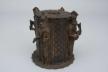
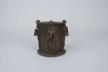
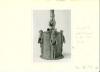
Titel designation | Altar der Hand (Ikegobo) einer Iyoba |
Materialien material | ANORGANISCH/Metall/Gelbguß |
Heutiges Staatsgebiet des Herstellungsortes production place | Afrika/Westafrika/Nigeria/Benin-Reich |
Provenienz/Name prior source provenance | Erdmann |
Provenienz Objektitinerar Akteure Orte Daten provenance | Friedrich Erdmann |
Provenienz/Affiliation provenance | H. Bey & Co., Bey & Zimmer |
Provenienz/Country provenance | Germany |
Provenienz/Date of Birth provenance | 23.10.1866 |
Provenienz/Date of Death provenance | presumably 1907 |
Provenienz/First Name provenance | Friedrich |
Provenienz/No provenance | 10 |
Provenienz/Place of Birth provenance | Altona (today Hamburg) |
Provenienz/Place of Death provenance | presumably South Africa |
Provenienz/Profession provenance | Merchant |
Provenienz/Role-Function/0 provenance | Consignor |
Provenienz/Role-Function/1 provenance | Collector |
Provenienz/Sex provenance | male |
Provenienz/Short Biography provenance | Friedrich Erdmann (1866-presumably 1907) was a merchant from Hamburg and worked as a managing director for the trading company Bey & Zimmer in Lagos, Warri and Sapele in southern Nigeria. Erdmann is known to have visited Benin City after it was conquered by British troops, taking the artefacts that remained there to sell with the permission of the British military, as well as photographing the area. Erdmann was one of the key figures in Bey’s Benin business, selling a total of 13 objects from the Kingdom of Benin to the museum in 1898. His widow, Alma, corresponded with Felix von Luschan (1854–1924) in Berlin, and later sold objects from her husband’s collection. His son Kurt (1901–1964) was an art historian; he also sold pieces from his father’s estate. |
Provenienz/Street provenance | Große Bäckerstraße 24 |
Provenienz/Town provenance | Hamburg |
Hersteller kulturhist. Herkunftsgesellschaft ethnic attribution | --/Edo |
Heutiger Aufbewahrungsort Sammlung department and institution | Museum am Rothenbaum. Kulturen und Künste der Welt (MARKK) |
Akquisitionsdatum accession date | 1898 |
Alte Inventarnummer | |
Inventurdatum | 10.07.2009 |
Label Text (deu) | Altar der Hand Ikegobo einer Iyoba Unbekannte Werkstatt der Bronzegießergilde Igun Eronmwon / Königreich Benin, Nigeria, 17./18. Jh. / Gelbguss / Ankauf von Friedrich Erdmann, 1898, Inv. Nr. C 2338 Der Altar der Hand ist dem individuellen Erfolg seines Besitzers oder seiner Besitzerin gewidmet. Die Hand symbolisiert Errungenschaften im persönlichen Leben. Der Besitz dieser Altäre war ein Vorrecht hochrangiger Amtsinhaber und von Menschen, die etwas Großes geleistet hatten; also des Königs, der Königinmutter, der Würdenträger, Schmiede und Schnitzer, der Kriegshelden oder reicher Händler. Altäre aus Gelbguss waren dem König, der Königinmutter und dem Ezomo, einem hohen Heerführer, vorbehalten. |
Label Text (eng) | Altar of the Hand of an Iyoba Ikegobo Unidentified workshop of the Bronze Casters Guild Igun Eronmwon / Benin Kingdom, Nigeria, 17th/18th century / Brass / Acquired from Friedrich Erdmann, 1898, Inv. no. C 2338 The Altar of the Hand is dedicated to the individual success of its owner. The hand symbolizes achievements in personal life. The possession of such altars was a prerogative of high-ranking titleholders and of those who had made great achievements, like the king, the queen mother, chiefs, blacksmiths and carvers, war heroes or rich merchants. Altars made of brass were reserved for the king, the queen mother and the Ezomo, a high army commander. |
Maße | Höhe: 26,50 cm; Durchmesser: 17,00 cm |
Digital Benin collates digital material from institutions, and some of this material is inherently colonial and contains words, terms and phrases that are inaccurate, derogatory and harmful towards African and African diasporic communities. Catalogue transcriptions, book titles, exhibition titles and museum titles may contain harmful terms. We recognise the potential for the material to cause physical and mental distress as well as evoke strong emotions. Owing to the scale of the collection’s data, a process to implement sensitive-content warnings in the displayed data is still incomplete. The material within the catalogue does not represent Digital Benin’s views. Digital Benin maintains a strong anti-colonial, anti-racist position and affirms its support for centring the humanity of historically marginalised and disenfranchised communities. Read more about the background of this statement here