


Iconographies



Provenance
Institution data
| Institution field | Value |
|---|---|
Inventory number object id | LG1953.22.14 |
URL weblink | https://digitalbenin.org/catalogue/37_LG19532214 |
Object Description description | Uru are used for pouring and storing palm wine (okhere) and other liquid substances like water. In the Edo language, Uru is used to describe objects which could be considered jugs, ewers and aquamaniles. |
Diameter dimensions | 18.4 |
Dimension L (cm) dimensions | 38.5 |
Dimension W (cm) dimensions | |
Dimension H (cm) dimensions | |
Brief Object Description designation | |
Material material | |
Object Count object count | 1 |
Date Made date made | |
Associated Guild producer | Igun Ẹrọnmwọn |
Production Technique production technique | Casting |
Production Place production place | Benin City |
Inscriptions inscriptions | |
Note | |
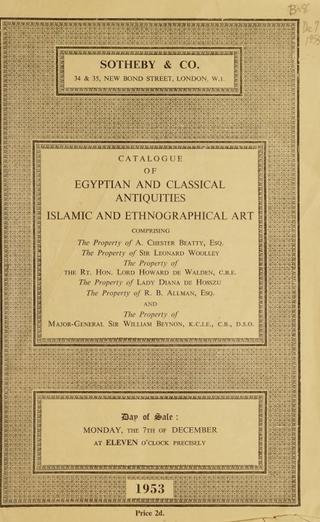
Inventory Book Description | Bronze jug from Benin. No. 186 in the sale catalogue where it is described as follows: "A RARE BENIN BRONZE WATER POT with globular body and cylindrical spreading neck, the handle in the form of a snake, a monkey in relief on the front, its mouth as the spout, the body ornamented with masks in relief and incised with figures and stylised foliage, the hinged cover termination in a scated figure and supported on four human feet with anklets, 15". Purchased by the Nigerian Government at a sale by Messrs. Sotheby & Co. Bond Street, London on December 7th, 1953: Mr. W. B. Fagg assistant keeper, British Museum acted for the Nigerian Government at the sale. |
fileNames | LG19532214_4.jpg, LG19532214_2.jpg, LG19532214_1.jpg, LG19532214_3.jpg, LG19532214_5.jpg |
| Institution field | Value |
|---|---|
Inventory No object id | LG 1953. 22. 14 |
Department of Antiquities Nigerian Museum Catalogue provenance | Purchases by the Nigerian Government at the Sale by Messrs. Sotheby & Co. Bond Street, London on December 7th, 1953: Mr. W. B. Fagg assistant keeper, British Museum acted for the Nigerian Government at the Sale. n° 186 - Bronze jug from Benin for £600 |
Object Name (as specified in the 2019 Lagos National Museum store/gallery inventory) | Benin bronze medicine pot. |
Digital Benin collates digital material from institutions, and some of this material is inherently colonial and contains words, terms and phrases that are inaccurate, derogatory and harmful towards African and African diasporic communities. Catalogue transcriptions, book titles, exhibition titles and museum titles may contain harmful terms. We recognise the potential for the material to cause physical and mental distress as well as evoke strong emotions. Owing to the scale of the collection’s data, a process to implement sensitive-content warnings in the displayed data is still incomplete. The material within the catalogue does not represent Digital Benin’s views. Digital Benin maintains a strong anti-colonial, anti-racist position and affirms its support for centring the humanity of historically marginalised and disenfranchised communities. Read more about the background of this statement here