Reg No.
5246
Edo designations
English designations
Armcuff
Categories
Ceremonial Regalia
Location
1 Adesogbe (Plymouth) Road, P.M.B. 1115, Benin City , Edo State
Loading...
Armcuff

Iconographies

2 annotations
Owẹn iba ẹdẹ ku
Rosette - 'The Sun Never Misses a Day'

This rosette design, usually found in the corners of Ama-Ẹrọnmwọn (bronze relief plaques), is one of two motifs representing the sun and one of a number of motifs in Edo art that are also connected with Olokun. The association between the sun and Olokun refers to the way in which the sun descends into the sea each day—hence the proverb ‘the sun never misses a day’—and the sea is where the deity Olokun lives ( ).

1 annotation
Owẹn iba ẹdẹ ku
Uhunmwu Ikpotoki
Portuguese Head

These motifs are known as Uhunmwu Ikpotoki in Edo, which translates as ‘Portuguese head’ in English. Portraits of Portuguese men, featuring only their heads and sometimes their shoulders, were used by artists as motifs on the Emwin Arhe (royal treasures), in particular on the Ama-Ẹrọnmwọn (bronze relief plaques) and Aken'ni Elao (carved altar tusks). Also included here are a series of two or three conjoined spirals, which are interpreted as abstract forms of this motif.

One of the earliest suggestions that many of the European figures depicted on objects were Portuguese was made two years after the 1897 British Colonial Military Campaign on Benin City by the British Museum curators Charles Hercules Read and Ormonde Maddock Dalton (1899, p. 19), based on testimony from seven chiefs in the aftermath of the military campaign. The long, straight hair, beards, and domed hats together led to the identification of these representations as Europeans (von Luschan 1919, pp. 54–57; Ezra 1992, p. 246).

When included within the visual imagery of the Emwin Arhe, the Portuguese are associated with the new Atlantic trade and the consequent wealth that emerged following first contact with the Portuguese in the late 15th century. For this reason, Portuguese heads are also often associated with the sea deity Olokun. Eisenhofer (2007, p. 59) argued that the Portuguese figures and heads as motifs on the royal treasures are symbols of the king’s power: “these depictions of foreigners helped to build and strengthen the king’s image.”

When incorporated into the design of the Ama-Ẹrọnmwọn (bronze relief plaques), Curnow (1997, p. 48) instead argued that these motifs could in fact indicate events that took place during Ọba Esigie’s reign. Ọba Esigie is associated with the Portuguese, as they became increasingly important during his reign, assisting with battles against the Igala from Idah, bringing Catholicism to Benin, and introducing weaponry such as guns and cannons, which were instrumental in the expansion of the kingdom.

1 annotation
Uhunmwu Ikpotoki

Provenance

6 events
Production
unknown to February 22, 1897 (day approximate)
The object was produced by Unknown member(s) of the Igun-Ẹrọnmwọn guild in Benin City.
Looted
February 22, 1897 (day approximate) to June 1899 (year approximate)
The object was looted by Unknown member of the British colonial military campaign on Benin - February 1897 from Benin Kingdom.
Auction
1901
The object was auctioned to William Downing Webster through Stevens Auction Rooms in London.
Auction
June 30, 1902
The object was auctioned to Theodor 'Theo' Rautenstrauch by William Downing Webster through Stevens Auction Rooms in London.
Donation
November 21, 1902
The object was donated by Theodor 'Theo' Rautenstrauch to the Rautenstrauch-Joest-Museum in Cologne.
Restitution
December 8, 2022
The object was restituted by the Rautenstrauch-Joest-Museum to the Omo n'Oba n'Edo Uku Akpolokpolo, Ọba of Benin & National Commission for Museums and Monuments, Nigeria from Cologne to Nigeria.

Related archival documents

2 documents
See all
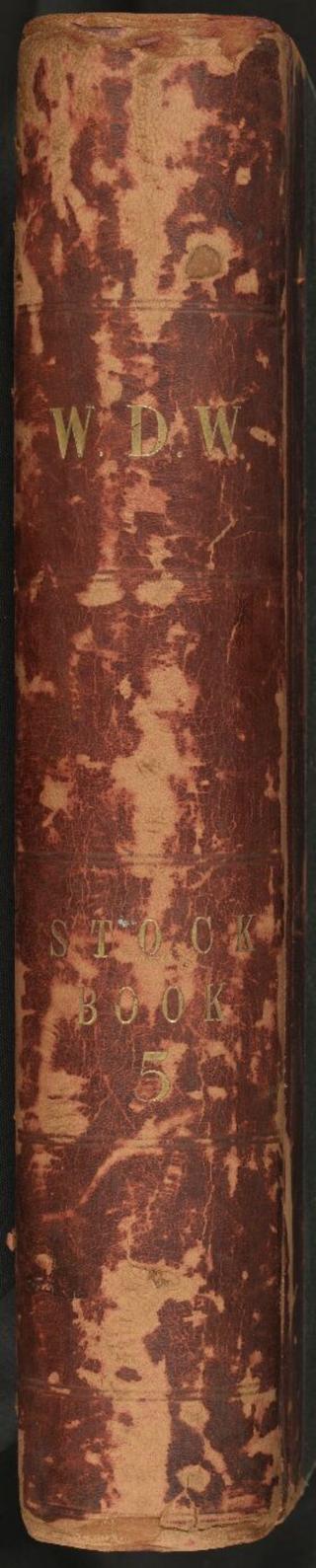
An archival document representing a Inventories of 257 page(s)
Inventory
Museum of New Zealand Te Papa Tongarewa
Stock books
Date
March 24, 1900 to December 31, 1903
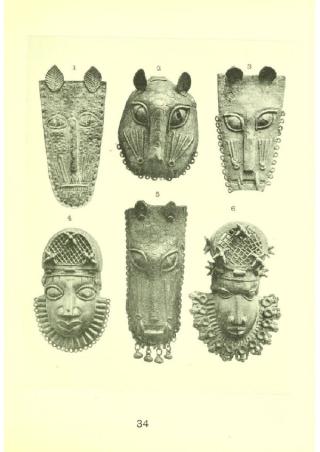
An archival document representing a Sales Catalogs of 48 page(s)
Sales Catalogue
Wellcome Collection
Catalogue of ethnological specimens : European and Eastern arms & armour, Prehistoric and other curiosities / W.D. Webster, Oxford House, Bicester, Oxon., England.
Date
January 1, 1901 to December 31, 1901

Institution data

Rautenstrauch-Joest-Museum
The data was transferred directly by the institution.
Last updated: 2022-07-27
Language: english
Institution fieldValue
Additional Ids
object id
190219
Additional Ids / bundle
object id
RJM 1902/19
Other numbers
object id
11281 (old inventory number)
Reg No.
object id
5246
Reg. No / Inventory number
object id
RJM 5246
Object name
designation
object type
armcuff
Object name / Title
designation
Arm Cuff
materials
material
copper alloy
Dimension/s
dimensions
H.12.50cm W.8.80cm X. 8.2cm
previous owner/collector
prior source
Theodor Rautenstrauch, son of Adele and Eugen Rautenstrauch, Member of Deutsche Kolonialgesellschaft - Dep. Köln Collection Wilhelm Joest 1904
provenance
provenance
30.06.1902 to 21.11.1902, Theodor Rautenstrauch (1873-1907) (auction); from 21.11.1902, the Rautenstrauch-Joest Museum (donation); 1902 - 30.06.1902, J.C. Stevens, London (place), Stevens' Auction Rooms; auction in 1901, W. D. Webster, London, Bicester (commission)
Institution
department and institution
Rautenstrauch-Joest Museum - Cultures of the World, Cologne
Institution acquisition date
accession date
11/21/02
Acquisition details
accession method
donation
comments
notes
Theodor Rautenstrauch got the objects at an auction of Mr. J.C. Stevens on 03.06.1902 in London. The auction named "Benin brass" and embraced a collection of the British Punitive from 1897.
Copyright
license
© Museumsgesellschaft RJM Köln, Foto Uli Grohs
notes concerning "other numbers"
Probably inventory number W.D. Webster
Sensitive Content

Digital Benin collates digital material from institutions, and some of this material is inherently colonial and contains words, terms and phrases that are inaccurate, derogatory and harmful towards African and African diasporic communities. Catalogue transcriptions, book titles, exhibition titles and museum titles may contain harmful terms. We recognise the potential for the material to cause physical and mental distress as well as evoke strong emotions. Owing to the scale of the collection’s data, a process to implement sensitive-content warnings in the displayed data is still incomplete. The material within the catalogue does not represent Digital Benin’s views. Digital Benin maintains a strong anti-colonial, anti-racist position and affirms its support for centring the humanity of historically marginalised and disenfranchised communities. Read more about the background of this statement here