


Provenance
Institution data
| Institution field | Value |
|---|---|
object_number object id | 569 |
title designation object type | Mask of a cow |
description description | Mask of a cow. West Africa, Nigeria: Benin. Mid 18th century. Bronze. h. 24.1 x w 29.7 x d. 6.4 cm. Acquired 1974. Robert and Lisa Sainsbury Collection. UEA 569 |
free_field.content description | JA4373MH-569Polaroids in cons file569a1569a2This cow mask displays downward sloping horns, with two small ears on the side of the head. The ears are hollow for about two thirds of their length and are supported by integral rods. There is floral-like patterning to the face and horns, and vertical geometric patterning to the top of the head. There is some damage to the top right of the facial area and faults in casting show several ‘burn in' repairs. (VADS Helen Coleman) This cow mask may have some connection with a kind of reredos which can be seen at the back of some of the photographs (Fagg, 1970) of the royal ancestor altars ( which are believed to surmount the deceased king's burial chamber). On this reredos are carved stylised cow's heads at intervals of about a yard. The reference must be to the prime sacrificial animal in the descending series at the Oba's annual Igue (the worship of his head), the cow being the penultimate offering before human sacrifice until the Expedition of 1897 brought that part of the ritual to an end. When it came to those last two sacrifices, a sheet was raised between the Oba and the victims, since he was strictly forbidden to see them, though fully responsible for their deaths. Nowadays, the delicacy of this arrangement is commemorated by the raising of the sheet for the most important animal to be sacrificed. In 1958 Oba Akenzua II had a cow tethered in full sight of the populace, but a ram was sacrificed instead. The arabesque decorations on the animal's face are normally a mark of pieces believed to have been made during the Eresonyen revival of bronze- casting (1735-50), though they were introduced in the Middle Period as a decoration on clothes, especially those of Europeans. This pendant, which is perhaps unique in its form, is an excellent example of the work of the Iguneromwon (bronze-casters' guild) under Eresonyen. It is a technically adventurous, perhaps even 'one-off' piece of bronze-casting, despite indications that the caster may perhaps have overreached himself- as evidenced by the gap between the ears and several 'burn-in' repairs. In a straightforward piece of lost-wax casting, a wax model is made on a clay core which is then encased in a clay investment, complete with casting vents; the wax is melted out and molten bronze is poured in till the mould is fill. If there is insufficient metal, or an air pocket develops, the casting will be somewhat deficient. Here, the artist attempted a somewhat ambitious task; the horns and ears would have posed problems in the casting flow. When making a 'burn-in' repair, a wax mould of the deficient areas is made to fill the gaps in the casting; the whole is re-encased in a clay investment and the casting process is repeated. Sometimes the repair is virtually unnoticeable from the outside, but traces on the inside are clearer. The horns are complete at the back; there are nail holes for suspension behind each ear, and the ears are supported by integral rods. (Margret Carey. In: Steven Hooper (ed.), 1997, Catalogue to the Robert and Lisa Sainsbury Collection. University of East Anglia.) |
material material | Bronze |
dimension.free dimensions | h. 24.1 x w 29.7 x d. 6.4 cm |
dimension.type dimensions | HeightWidthDepth |
dimension.unit dimensions | mmmmmm |
object_category object type | Mask3D |
inscription.content inscriptions | Collection identification and object number |
inscription.method inscriptions | Silversafe paper coated and adhered with Paraloid B72 |
inscription.notes inscriptions | Pre-2001 |
inscription.type inscriptions | Object number label |
inscription.type.lref inscriptions | 1778 |
acquisition.source prior source | |
collection prior source | Robert and Lisa Sainsbury Collection |
owner_hist.notes prior source provenance | |
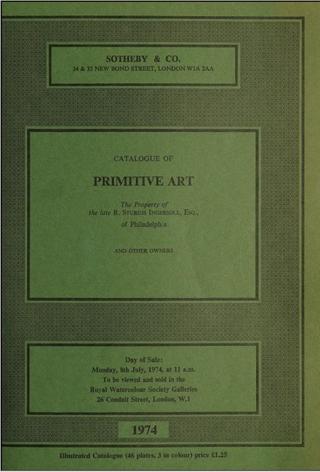
acquisition.notes provenance | Benin City was the principal settlement of the Edo Kingdom of Benin, situated in the south of Nigeria. In February 1897 the city was attacked by British military, ending the ruling indigenous administration, and the Oba (King) Ovonramwen Nogbaisi (reigned 1888–1897) was exiled. The city was destroyed along with its Royal Palaces. The royal regalia and important religious and memorial sculptures that survived the raid, were looted by the combined forces of British Royal marines and other colonial forces. The Oba’s son, Aiguobasinwin Ovonramwen, Eweka II (reigned 1914-1933) returned to Benin City in 1914, restored the city and Palace complex and the Oba dynasty continues today as a regional and cultural administration in Edo state, Nigeria. The number of artefacts taken in 1897 is believed to be around 2,500, which were shipped to the UK by the British Admiralty. About 40% of the objects were accessioned to the British Museum (700 works) and other works were given to individual military personnel. The remainder were sold at auction by the Admiralty to pay for the expedition , for example, at Stevens Auction Rooms, 38 King Street, London, May 25, 1897, followed by several sales at William Downing Webster, Bicester, between 1898 and 1900. The artefacts are now dispersed across museum collections, notably in Europe and the USA. Provenance between 1897 and 1974 not known.Purchased by Robert Sainsbury at Sotheby’s sale of ‘Primitive Art’, July 1974 Donated by Robert and Lisa Sainsbury to the University of East Anglia, 1974 (Sainsbury Centre for Visual Arts) |
credit_line provenance | Donated by Robert and Lisa Sainsbury, 1978 |
cultural_group ethnic attribution | Edo |
acquisition.date accession date | 1974 |
acquisition.method accession method | |
notes notes | |
exhibition exhibition history | |
exhibition.date.end exhibition history | |
exhibition.date.start exhibition history | |
exhibition.lref exhibition history | |
exhibition.organiser exhibition history | |
exhibition.person_responsible exhibition history | |
exhibition.person_responsible.role exhibition history | |
exhibition.venue exhibition history | |
catalogue.illus_page bibliography | 156 |
catalogue.name bibliography | Robert and Lisa Sainsbury Collection / edited by Steven Hooper |
catalogue.name.lref bibliography | 7 |
catalogue.number bibliography | 119 |
catalogue.page bibliography | 156, 157 |
catalogue.volume bibliography | 2 |
current_owner legal status | |
condition condition | |
condition.lref condition | |
acquisition.method.lref | |
acquisition.source.lref | |
collection.lref | 297 |
cultural_group.lref | 519 |
current_location.context | LA Screen 2 B |
current_location.date | 1/4/18 |
current_location.lref | 1245 |
current_location.name | LA Screen 2 B |
current_location.notes | (TH) |
current_location.type | 1 |
current_owner.lref | |
dimension.type.lref | 678 |
dimension.unit.lref | 999 |
dimension.value | 25029764 |
documentation.author | |
documentation.place | |
documentation.publisher | |
documentation.shelfmark | |
documentation.staff_library | |
documentation.title | |
documentation.title.lref | |
documentation.year | |
edit.date | 2020-08-122020-06-082020-06-082020-06-012020-06-012020-06-012020-05-182020-04-032019-06-03 |
edit.name | ruh16mruruh16mruruh16mruruh16mruruh16mruruh16mruawx19acuawx19acuxnx18rbu |
edit.source | collect>interncollect>interncollect>interncollect>interncollect>interncollect>interncollect>interncollect>internCOLLECT>intern |
edit.time | 11:32:4910:36:4810:32:4913:22:3513:19:1111:54:0914:52:0611:15:1811:28:01 |
frame | Object mount |
frame.notes | Hollow back |
free_field.confidential | x |
free_field.type | B/W NegB/W NegB/W NegTransparencyTransparency |
input.date | 2/4/02 |
input.name | g122 |
input.source | collect>intern |
input.time | 4:34:42 PM |
label.date | |
label.source | |
label.text | |
label.type | |
material.lref | 55 |
object_category.lref | 3338815 |
owner_hist.date.start |
Digital Benin collates digital material from institutions, and some of this material is inherently colonial and contains words, terms and phrases that are inaccurate, derogatory and harmful towards African and African diasporic communities. Catalogue transcriptions, book titles, exhibition titles and museum titles may contain harmful terms. We recognise the potential for the material to cause physical and mental distress as well as evoke strong emotions. Owing to the scale of the collection’s data, a process to implement sensitive-content warnings in the displayed data is still incomplete. The material within the catalogue does not represent Digital Benin’s views. Digital Benin maintains a strong anti-colonial, anti-racist position and affirms its support for centring the humanity of historically marginalised and disenfranchised communities. Read more about the background of this statement here