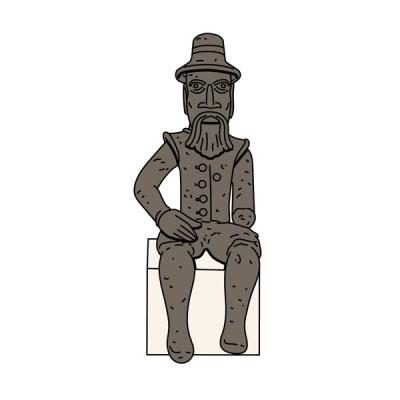
Ikpotoki
Ikpotoki means ‘Portuguese’ in Edo. Benin oral traditions claim that a man called Ogbeide, nicknamed Okhuaihe and deified in Benin during the reign of Ọba Ewuare, used divination to attract Europeans to visit the kingdom.
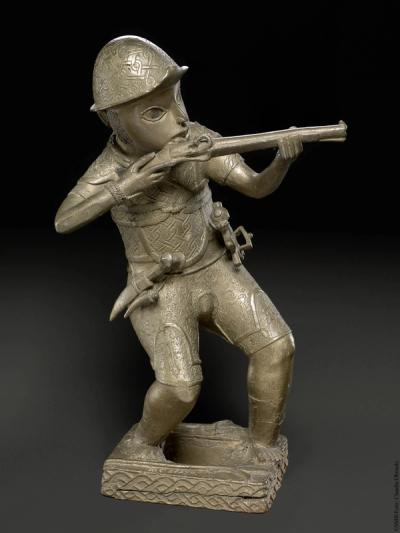
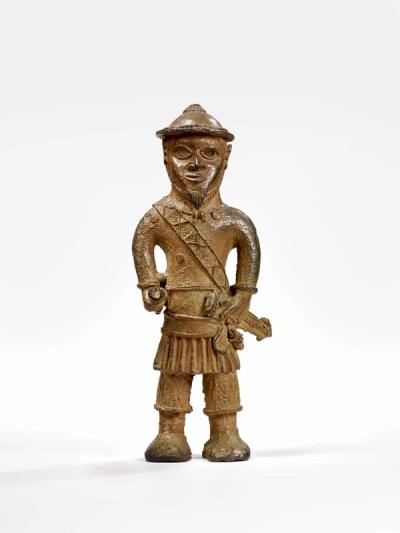
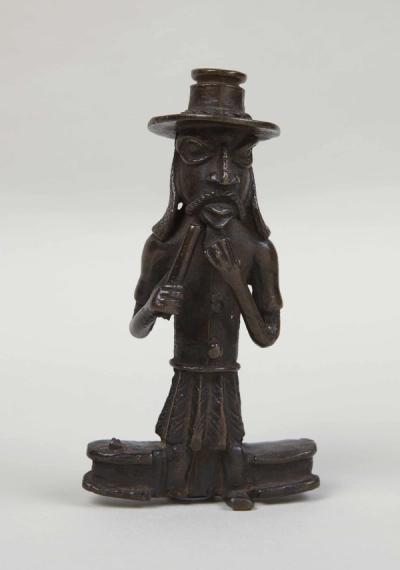
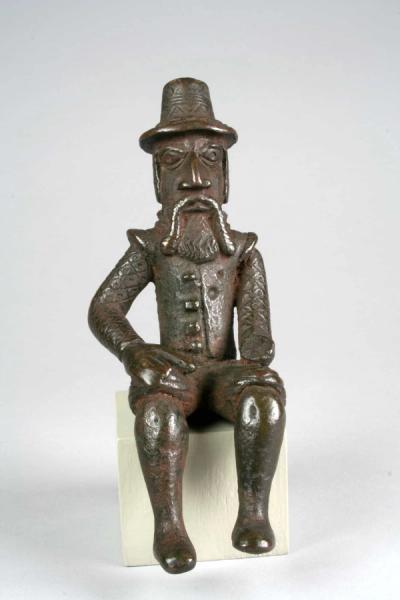
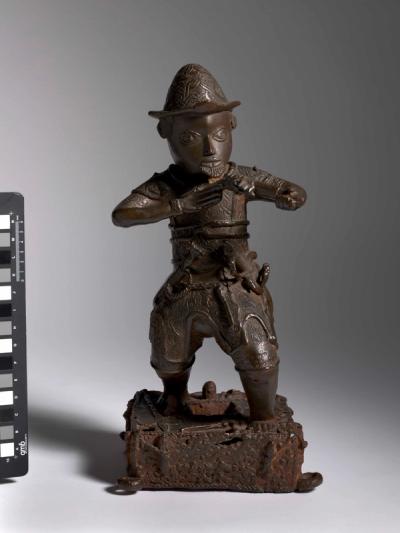
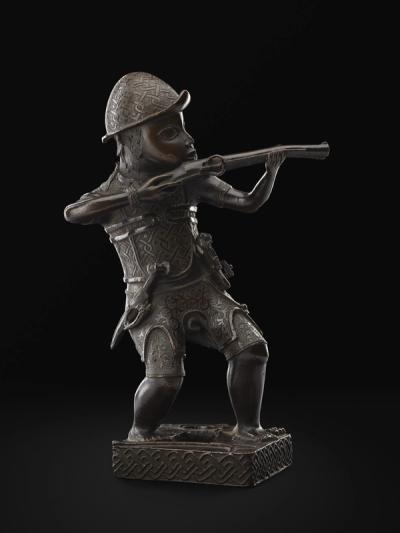
The first recorded Europeans to reach Benin between 1472 and 1485 included Ruy de Sequiera in 1472 and Joas Alfonso d’Aveiro in 1485 (Ryder, 1969 ). After the arrival of the Portuguese, casters and carvers of the guilds began to represent the Portuguese in the artworks they created. Heads as well as full figures were carved and cast, as well as depictions on arm cuffs, ivory tusks and relief plaques.
Ikpotoki figures (Portuguese figures) are easily distinguished by their style of clothing, including hats/helmets, as well as facial features, namely the thin straight noses. These figures, in the round (rather than those on plaques) are typically shown holding muskets, as if ready to shoot. The Portuguese and the Edo first came into contact in the late fifteenth century, and both parties recognised there was much to gain from a continued relationship. It appears that Portuguese weaponry was particularly desirable for the Ọba and Benin people. In 1515, Benin went to war against the Attah of Idah, who ruled the neighbouring kingdom. Portuguese mercenaries and weapons helped the Edo to win this battle and others at the time, enabling them to expand the kingdom.


Educational Material
Digital Benin collates digital material from institutions, and some of this material is inherently colonial and contains words, terms and phrases that are inaccurate, derogatory and harmful towards African and African diasporic communities. Catalogue transcriptions, book titles, exhibition titles and museum titles may contain harmful terms. We recognise the potential for the material to cause physical and mental distress as well as evoke strong emotions. Owing to the scale of the collection’s data, a process to implement sensitive-content warnings in the displayed data is still incomplete. The material within the catalogue does not represent Digital Benin’s views. Digital Benin maintains a strong anti-colonial, anti-racist position and affirms its support for centring the humanity of historically marginalised and disenfranchised communities. Read more about the background of this statement here