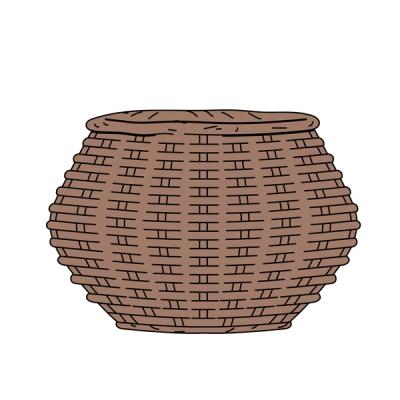
Okhua'ẹ
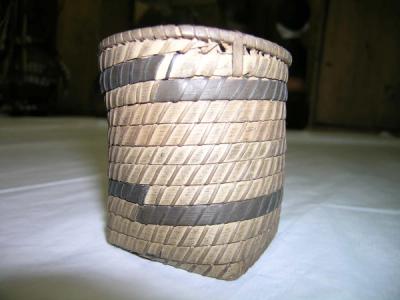
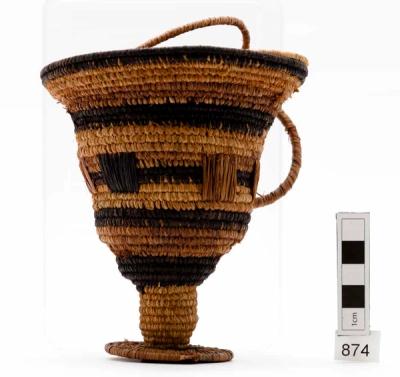
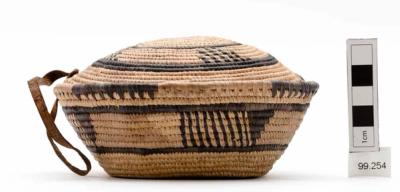
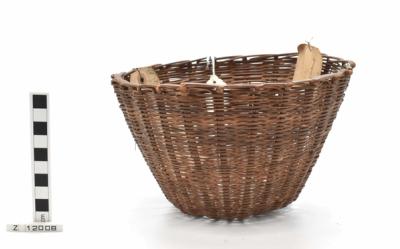
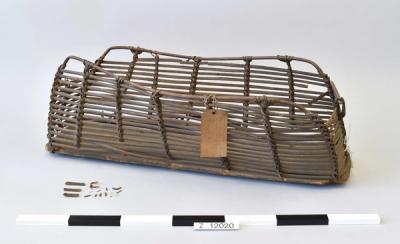
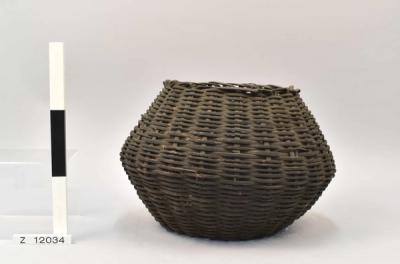
Okhua’ẹ (baskets) are traditionally made from natural materials such as reeds, raffia or grass which is either woven or coiled together with twine. Okhua’ẹ were used for storage or to carry objects from one place to another, and may have been used in domestic and commercial contexts.
In 1910, the British anthropologist and government official Northcote Whitridge Thomas wrote that ‘[n]umerous types of Okhua’ẹ are made in various parts of the country … they are used for carrying food products home, or to the market, for storing things such as beans, or for fish traps’. (p.22 ). Despite how ubiquitous baskets are reported to be, today few are part of institutional collections from Benin Kingdom.
Educational Material
Digital Benin collates digital material from institutions, and some of this material is inherently colonial and contains words, terms and phrases that are inaccurate, derogatory and harmful towards African and African diasporic communities. Catalogue transcriptions, book titles, exhibition titles and museum titles may contain harmful terms. We recognise the potential for the material to cause physical and mental distress as well as evoke strong emotions. Owing to the scale of the collection’s data, a process to implement sensitive-content warnings in the displayed data is still incomplete. The material within the catalogue does not represent Digital Benin’s views. Digital Benin maintains a strong anti-colonial, anti-racist position and affirms its support for centring the humanity of historically marginalised and disenfranchised communities. Read more about the background of this statement here