Onwọ

Onwọ

Description

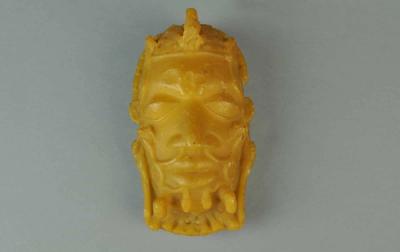
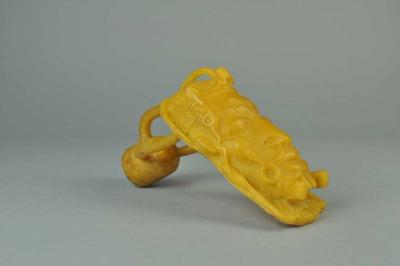
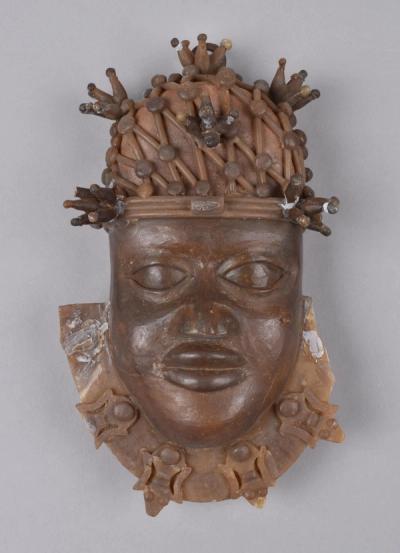
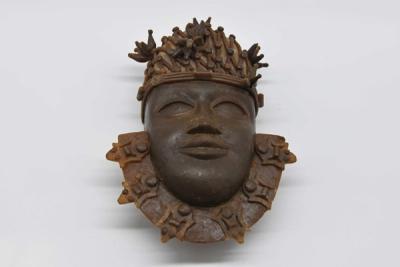
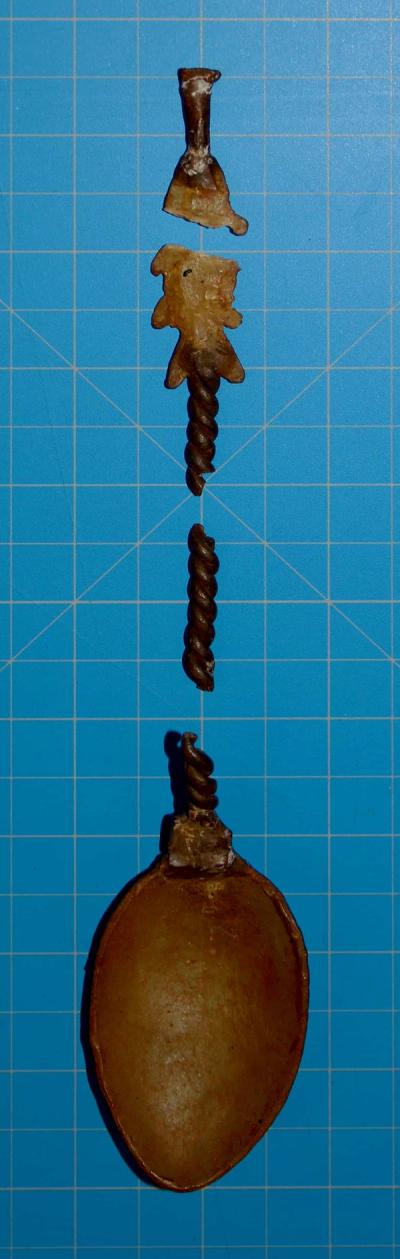
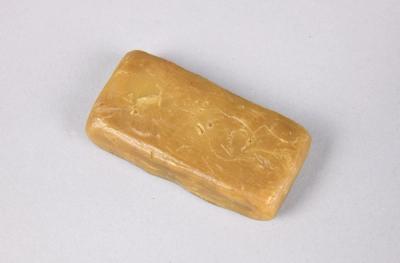
Onwọ directly translates to ‘beeswax’ in English and can be used to describe the wax model made by brass-casters. It is an essential material, because when heated the Onwọ melts and creates a vacuum for the molten bronze or brass. Onwọ can refer to bees and honey as well. In contemporary Benin City the brass-casters sometimes substitute Onwọ with candle wax. However, Onwọ cannot be totally replaced in this process, and the brass-casters confirm that some works could only be designed using Onwọ.

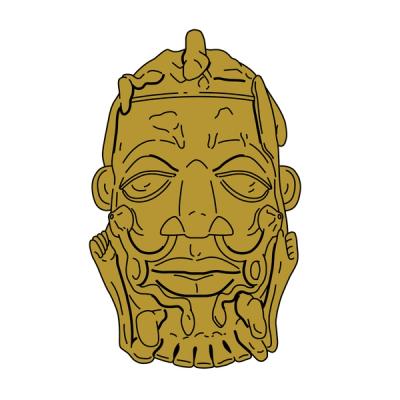
During the first half of the twentieth century, a small number of Onwọ was acquired by European anthropologists and ethnographers in Benin City as part of larger ‘sets’ of casting materials that showed the technological process of lost-wax casting. These models have a clay core and wax model applied to the top, and they show how brass-casters sculpted objects, often highly detailed ones, with wax. Owing to the nature of lost-wax casting, where the mould has to be broken to release the object inside, each object had to be formed individually in wax, and therefore no two objects can be exactly the same.
Objects defined as Onwọ

6 objects
See all
Spoon
Institution
Field Museum
recordNumber
1114672
Edo designations
Uhẹnhẹn/Ekuyẹ, Onwọ
Wax Model
Institution
University of Pennsylvania Museum of Archaeology and Anthropology (Penn Museum)
Object Number: (Object Numbers)
59-36-2
Edo designations
Onwọ
Pendant Mask
Institution
University of Pennsylvania Museum of Archaeology and Anthropology (Penn Museum)
Object Number: (Object Numbers)
59-36-4
Edo designations
Uhunmwu-Ẹkuẹ, Onwọ
Pendant Mask
Institution
University of Pennsylvania Museum of Archaeology and Anthropology (Penn Museum)
Object Number: (Object Numbers)
59-36-5
Edo designations
Uhunmwu-Ẹkuẹ, Onwọ
Pendant Mask
Institution
British Museum
Registration number
Af1932,1205.2
Edo designations
Uhunmwu-Ẹkuẹ, Onwọ
Pendant Mask
Institution
Powell-Cotton Museum
Accession Number
ETH.CAM2.967
Edo designations
Uhunmwu-Ẹkuẹ, Onwọ

Oral histories related to Onwọ

10 interviews
See all
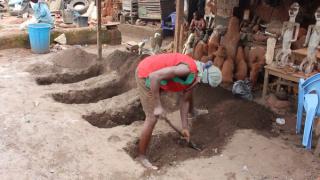
Bronze Casting at Aigbe Foundry Pt. 7: Digging a Pit for Bronze Casting
Monday Aigbe and Ewaen Aigbe
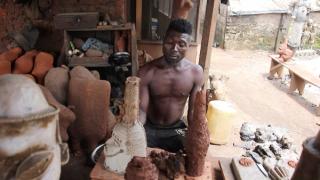
Bronze Casting at Aigbe Foundry Pt. 6: The Making of an Odudua Mask
Monday Aigbe and Ewaen Aigbe
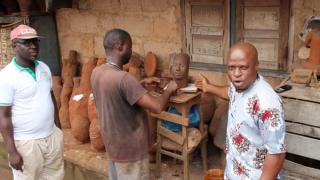
Bronze Casting at Aigbe Foundry Pt. 4: Making of an Osun Bronze Figure
Monday Aigbe and Ewaen Aigbe

Archival documents related to Onwọ

6 documents
See all
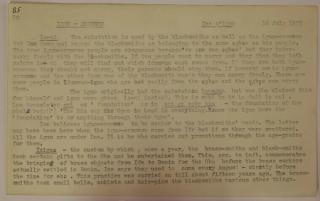
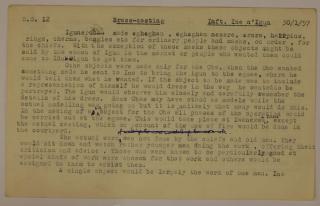
An archival document representing a Research notes of 3 page(s)
Research notes
Cadbury Research Library, University of Birmingham
Papers of Robert Elwyn Bradbury
Date
July 16, 1957
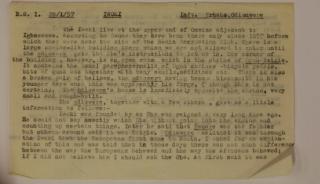
An archival document representing a Research notes of 5 page(s)
Research notes
Cadbury Research Library, University of Birmingham
Papers of Robert Elwyn Bradbury
Date
January 30, 1957
An archival document representing a Research notes of 2 page(s)
Research notes
Cadbury Research Library, University of Birmingham
Papers of Robert Elwyn Bradbury
Date
January 28, 1957
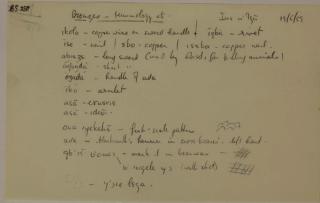
An archival document representing a Research notes of 2 page(s)
Research notes
Cadbury Research Library, University of Birmingham
Papers of Robert Elwyn Bradbury
Date
May 19, 1959
Sensitive Content

Digital Benin collates digital material from institutions, and some of this material is inherently colonial and contains words, terms and phrases that are inaccurate, derogatory and harmful towards African and African diasporic communities. Catalogue transcriptions, book titles, exhibition titles and museum titles may contain harmful terms. We recognise the potential for the material to cause physical and mental distress as well as evoke strong emotions. Owing to the scale of the collection’s data, a process to implement sensitive-content warnings in the displayed data is still incomplete. The material within the catalogue does not represent Digital Benin’s views. Digital Benin maintains a strong anti-colonial, anti-racist position and affirms its support for centring the humanity of historically marginalised and disenfranchised communities. Read more about the background of this statement here