
Uman-ague/Ugbugbe
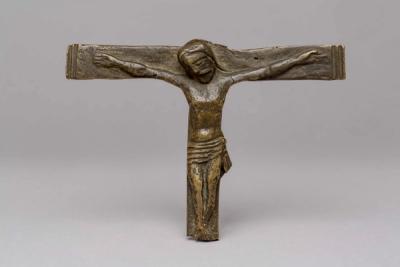
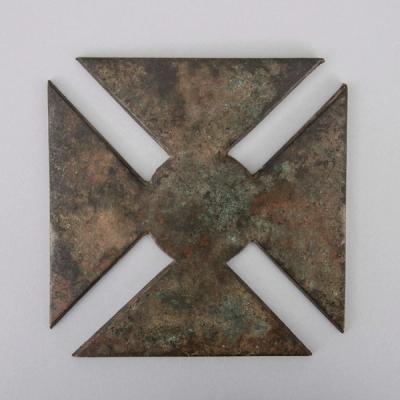
Uman-ague and Ugbugbe are two different kinds of crosses. Uman-ague refers to the equal-armed or Maltese cross, and Ugbugbe is used to describe the Christian cross, which has a longer vertical axis. Uman-ague is a symbol associated with the Holy Aro Osa Church. According to oral tradition, the Uman-ague can be given to a chief who has passed through the Ague fast or who has been in the team that went to Ẹguae-Oghene, which is located a journey of about six hundred days away from Benin City, although the exact location is not known today. Upon reaching Ẹguae-Oghene, the team would have to meet the Oghene, a religious leader. However, the Oghene cannot be met face to face and stays behind a curtain when meeting with visitors. He can only reveal his big toe, which is red, to prove his existence. When the chief returns to Benin, he is answerable to only the Ọba and no other.
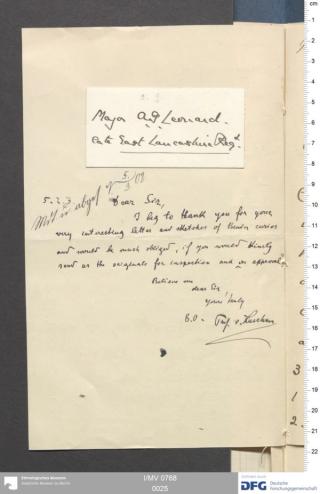
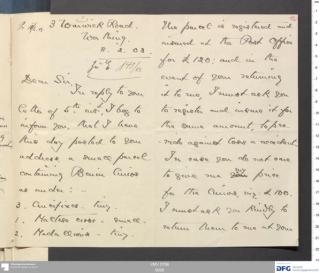
Although today many people in Nigeria, and Benin City, identify as Christians, this was not the case five or six hundred years ago. Crosses such as these reflect interaction between Europeans, in particular the Portuguese, and the Edo people in the past. Trade was the focus of these early relationships, however trade and Christianity – through missionary work – were closely entangled. A papal edict forbade any Christian power, such as the Portuguese, from trading weapons with a non-Christian partner (Eisenhofer in Plankensteiner, 2007, p.301 ). For the Edo, weapons such as guns were highly desirable in the emerging expansionist state, and so Christianity was accepted to enable firearms to be imported to Benin Kingdom.



Educational Material
Digital Benin collates digital material from institutions, and some of this material is inherently colonial and contains words, terms and phrases that are inaccurate, derogatory and harmful towards African and African diasporic communities. Catalogue transcriptions, book titles, exhibition titles and museum titles may contain harmful terms. We recognise the potential for the material to cause physical and mental distress as well as evoke strong emotions. Owing to the scale of the collection’s data, a process to implement sensitive-content warnings in the displayed data is still incomplete. The material within the catalogue does not represent Digital Benin’s views. Digital Benin maintains a strong anti-colonial, anti-racist position and affirms its support for centring the humanity of historically marginalised and disenfranchised communities. Read more about the background of this statement here