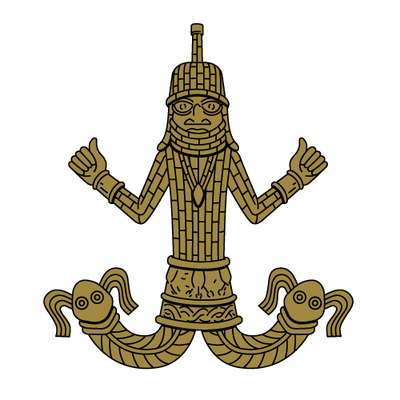
TBC_Ọba Ohẹn
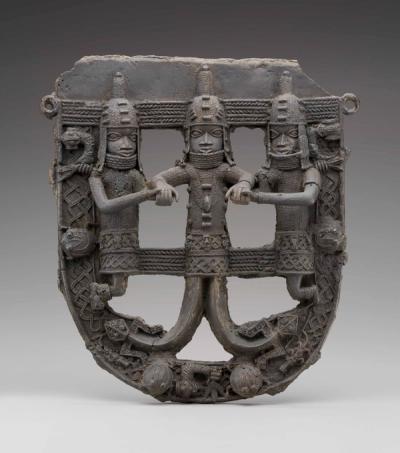
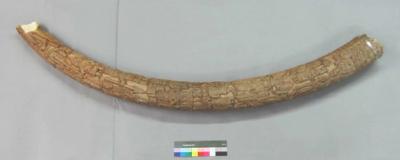
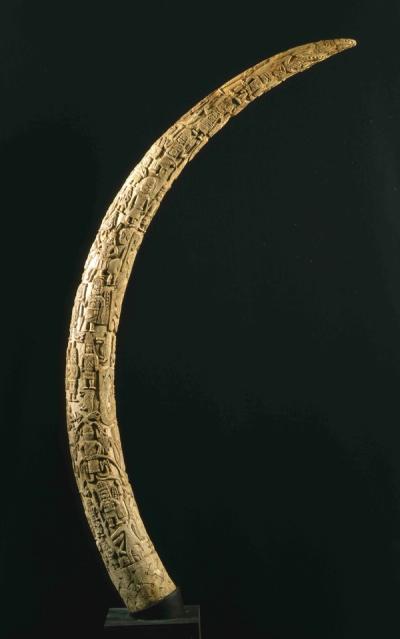
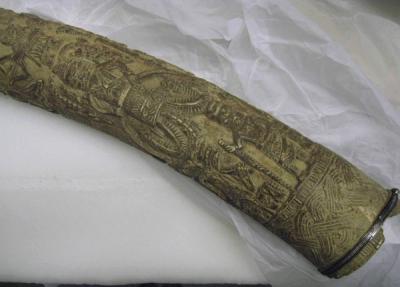
This motif of an Ọba with legs represented as two mudfish is often interpreted as Ọba Ohẹn, who reigned c. 1334–1370. According to oral traditions, Ohẹn suffered from paralysis of the legs and unsuccessfully attempted to conceal his condition from the chiefs and members of the royal court. The Iyasẹ Emuze eventually hid in the Ọba’s chambers to discover his secret ( ). When Ohẹn discovered this, he ordered the Iyasẹ to be executed. However, the people learned of the order and turned against the Ọba. According to the tradition, they plotted to kill him ritually by digging a hole beneath his throne and stoning him with Orhue (white kaolin chalk) when he fell into it ( ; ).
Not all representations of an Ọba with mudfish legs, however, are understood to refer to Ohẹn. Variations in the objects and animals carried by the figure are thought to indicate different meanings ( ; ). Members of the Igbesamwan and Igun-Ẹrọnmwọn have emphasised the significance of these accompanying motifs (Blackmun 1984, pp.249–255). When the mudfish-legged Ọba is shown holding aquatic creatures such as crocodiles, for example, the image has been interpreted as a “cosmological image” representing the correspondence between the two monarchs: the Ọba of Benin, ruler of the land, and Olokun, ruler of the waters ( ). By contrast, representations in which the Ọba holds swords or staffs have been interpreted specifically as depictions of Ọba Ohẹn.

Digital Benin collates digital material from institutions, and some of this material is inherently colonial and contains words, terms and phrases that are inaccurate, derogatory and harmful towards African and African diasporic communities. Catalogue transcriptions, book titles, exhibition titles and museum titles may contain harmful terms. We recognise the potential for the material to cause physical and mental distress as well as evoke strong emotions. Owing to the scale of the collection’s data, a process to implement sensitive-content warnings in the displayed data is still incomplete. The material within the catalogue does not represent Digital Benin’s views. Digital Benin maintains a strong anti-colonial, anti-racist position and affirms its support for centring the humanity of historically marginalised and disenfranchised communities. Read more about the background of this statement here