


Identifikationsnummer
C 2897
Edo designations
English designations
Relief Plaque
Categories
Palace Architecture & Ornamentation
Location
1 Adesogbe (Plymouth) Road, P.M.B. 1115, Benin City , Edo State
Loading...
Relief Plaque
Relief Plaque
Relief Plaque
Relief Plaque
Relief Plaque
Relief Plaque
Relief Plaque

Iconographies

32 annotations
Ubanu'hi / Obanu'hi
Ubanu'hi / Obanu'hi
Inifinity Symbol

The Ubanu'hi (infinity symbol) is a kind of guilloche or interlaced strapwork motif that can be angular or rounded. It was used by Edo artists in the decoration of many Emwin Arhe (royal treasures) and is ubiquitous in Benin royal arts. Ubanu'hi is a shortened form of “uba no Ọba ya de agbon ke ehimwin yi”, which means “the rope with which the Ọba ties the heaven and earth together” (pers. comm. Chief John Igbineweka Inneh n’Igbesawman, 2022). Similarly, Paula Ben-Amos Girshick (in Plankensteiner 2007, pp. 339, 341) described this as “Ọba n’iri agbon”, or the “rope of the world” pattern.

According to Ọbabanmu Ineh (in Blackmun 1984, p. 51), the use of this motif indicates that objects were carved by members of the Igbesanmwan. However, the motif is found on all types of Emwin Arhe (royal treasures), not only those made of ivory or wood. On the flanges of the Ama (relief plaques) alone, Kathryn Gunsch (2018, pp. 75–77) identified three different versions of the Ubanu'hi and, through her analysis of over 850 plaques, found that these different Ubanu'hi forms align with other characteristics, such as dimensions, the prevalence of ornamental motifs, and stylistic qualities. Together, these provide evidence, she argues, of different production groups among the plaque makers .

Kate Ezra (1992, pp. 209, 264) went on to argue that the use of these motifs indicates that certain objects were used in a “royal context” and were associated with “royal patronage”.

3 annotations
Ubanu'hi / Obanu'hi
Ubanu'hi / Obanu'hi
Ubanu'hi / Obanu'hi
Water fern
Ebe Amẹ
Water Fern

Ebe Amẹ refers to a wide variety of plants, particularly the leaves of the water fern or river leaf, found in riverine areas of southern Nigeria ( ). Artists from the Igun-Ẹrọnmwọn used these as a decorative motif in the background of most Ama-Ẹrọnmwọn (bronze relief plaques). The petals of the Ebe Amẹ, like the points of the ἀghàdàgháda (crossroads), represent the four cardinal directions: north, east, south, and west. The number four plays a foundational role in the Edo calendar, which is structured around four market days ( ).

2 annotations
Ebe Amẹ
Ebe Amẹ
Uhunmwu-Ẹkuẹ
Pendant Mask

Uhunmwu-Ẹkuẹ (pendant masks) formed part of the ceremonial regalia worn by court dignitaries to indicate their rank or function and are frequently represented among the Emwin Arhe (royal treasures), particularly those made of brass, bronze, or ivory.

Different animals were depicted on Uhunmwu-Ẹkuẹ, particularly the heads of leopards and crocodiles. The most common type features the face or head of an Ọba. Other examples take the form of an elephant head incorporating the trunk-hand motif, a ram’s head, or, in a very small number of cases, the face of a Portuguese man. Different figures appear to have worn Uhunmwu-Ẹkuẹ with different imagery. For example, warrior chiefs are often depicted wearing leopard-head pendant masks, whereas crocodile-head Uhunmwu-Ẹkuẹ are generally shown being worn only by the Ọba and his Enọbare (Blackmun 2007, cat. no. 137, p. 365).

3 annotations
Uhunmwu-Ẹkuẹ
Uhunmwu-Ẹkuẹ
Uhunmwu-Ẹkuẹ
Ikoro
Armcuff

Ikoro (armcuffs) are made from different materials using different techniques, including brass sheet, cast bronze, and ivory. They were crafted by different guilds depending on the material used: artists of the Igun-Ẹrọnmwọn cast them in brass or hammered and incised them from brass sheet, whereas artists of the Igbesamwan carved ivory Ikoro. Ikoro were made in different qualities, from rather simple examples with abstract geometric decoration to finely carved ivory examples with brass or copper inlays. Ikoro are worn in pairs on both forearms by chiefs and the Ọba during ceremonies and festivals. Figures depicted on the Emwin Arhe (royal treasures) are often shown wearing such pairs.

5 annotations
Ikoro
Ikoro
Ikoro
Ikoro
Ikoro
Ẹguẹn
Anklet

Ẹguẹn are worn by the Ọba and chiefs as part of their Ehaengbehia, the full regalia worn during special ceremonies. Ẹguẹn are worn around the ankles or calves and can be made from beads, ivory, brass or even iron. A separate category, called Elubase, refers to those which have integrated rattles or crotal bell attachments, however both are described as anklets in English.

As early as 1899, Read and Dalton commented that the anklets worn by figures shown on plaques were a signifier of high rank. Today, anklets continue to signify social status, with the Ọba wearing many ivory and coral anklets stretching up his calves as part of his ceremonial regalia (Okpokunu, Agbontaen‐Eghafona & Ojo, 2005, p.162[106]). However, anklets were not the preserve of the Ọba alone, and different kinds and quantities were worn by other members of the royal court and Edo people. For example, Flora Kaplan (2006, p.85[107]) described a photograph of Iy’Ọba Aghahowa N’Errua, who took her title in 1981, in which she wears coral anklets as one of a number of insignia of her newly invested high rank. In contrast, brass anklets would be worn by young male attendants to the Ọba (see attendant figure), such as sword bearers or Emada pages (Kaplan, 2006, p.90[107]).

4 annotations
Ẹguẹn
Ẹguẹn
Ẹguẹn
Ẹguẹn
Oro
Headdress/crown with single projection

Figures wearing a headdress with a single protrusion from the crown of the head, known as the Oro, are found only among the Ọba and a select category of palace dignitaries whose ancestors originated in ancient Ile Ife ( ; Ọbazee 2025, p. 407). Only the Osa and Osuan, custodians of the Uwen and Ora deities, as well as members of the Emuru, who are responsible for the care of Iru vessels, may wear a headdress with the Oro. The identification of different figures is therefore interpreted based on the combination of the Oro with other items of regalia. Artists in the Igun-Ẹrọnmwọn and Igbesamwan depicted figures with the Oro on Ama-Ẹrọnmwọn (bronze relief plaques) and Aken'ni Elao (carved tusks), respectively. The Oro would either be made of coral beads as part of the crown or headdress, or be woven from itoto fibre ( ).

3 annotations
Oro
Oro
Oro
Colar Bead
Odigba
Coral beaded collar

Odigba (coral-beaded collar) is a rigid neck collar made of coral beads, worn as part of ceremonial attire only by senior princes who have been made Enigie (Inneh 2007, p. 107). Although Ibafe (2007, p. 43) argued that the Odigba was introduced during the Ogiso period (c. 900–c. 1170 AD) by Ogiso Ere, along with other symbolically important Emwin Arhe, such as the Ada (ceremonial sword) and the Ẹbẹn (ceremonial sword), this seems unlikely, as coral was only introduced in the late 15th century through trade with Portuguese merchants.

3 annotations
Odigba
Odigba
Odigba
Ewu ivie
Coral Beaded Shirt

The Ewu ivie (coral bead shirt) is made of strings of coral beads. This heavy shirt was part of the ceremonial regalia worn only by a small number of high-ranking members of the palace: the Ọba, the Edaiken, the Iy’Ọba, and the Ezọmọ (Girshick Ben-Amos 1999, p. 68). The Ewu ivie would be worn along with the Odigba (coral bead collar).

3 annotations
Ewu ivie
Ewu ivie
Ewu ivie
Osa
Osa

“Only Osa and the Osuan know what is in the palm frond” (Inneh 2007, p. 113)

The title of Osa is paired with that of Osuan, and both titles were created by Ọba Ewuare I to protect the Ọba and the Edo people. The Osa worships the deity Uwen, who is associated with protection, healing, and the prevention of wounds, particularly during warfare (Inneh 2007, p. 113).

During ceremonies such as Ugie and Oduduwa, the Osa and Osuan support the Ọba on either side, a pose that is frequently reflected in the visual language of Emwin Arhe (royal treasures) (Blackmun 2007, cat. nr. 168, p. 167). Both are often depicted wearing basketry headwear with a pointed Oro projection, similar to the headwear still worn by holders of these titles today (Inneh 2007, fig. 8, p. 110).

During the Igue festival, the Osa and Osuan wrap raffia palm cloth around their waists, which “indicate[s] the deep secrecy of the inner details of the palace worship and Ugie ceremonies” (Inneh 2007, p. 113).

1 annotation
Osa
Uhunmwu Ikpotoki
Portuguese Head

These motifs are known as Uhunmwu Ikpotoki in Edo, which translates as ‘Portuguese head’ in English. Portraits of Portuguese men, featuring only their heads and sometimes their shoulders, were used by artists as motifs on the Emwin Arhe (royal treasures), in particular on the Ama-Ẹrọnmwọn (bronze relief plaques) and Aken'ni Elao (carved altar tusks). Also included here are a series of two or three conjoined spirals, which are interpreted as abstract forms of this motif.

One of the earliest suggestions that many of the European figures depicted on objects were Portuguese was made two years after the 1897 British Colonial Military Campaign on Benin City by the British Museum curators Charles Hercules Read and Ormonde Maddock Dalton (1899, p. 19), based on testimony from seven chiefs in the aftermath of the military campaign. The long, straight hair, beards, and domed hats together led to the identification of these representations as Europeans (von Luschan 1919, pp. 54–57; Ezra 1992, p. 246).

When included within the visual imagery of the Emwin Arhe, the Portuguese are associated with the new Atlantic trade and the consequent wealth that emerged following first contact with the Portuguese in the late 15th century. For this reason, Portuguese heads are also often associated with the sea deity Olokun. Eisenhofer (2007, p. 59) argued that the Portuguese figures and heads as motifs on the royal treasures are symbols of the king’s power: “these depictions of foreigners helped to build and strengthen the king’s image.”

When incorporated into the design of the Ama-Ẹrọnmwọn (bronze relief plaques), Curnow (1997, p. 48) instead argued that these motifs could in fact indicate events that took place during Ọba Esigie’s reign. Ọba Esigie is associated with the Portuguese, as they became increasingly important during his reign, assisting with battles against the Igala from Idah, bringing Catholicism to Benin, and introducing weaponry such as guns and cannons, which were instrumental in the expansion of the kingdom.

2 annotations
Uhunmwu Ikpotoki
Uhunmwu Ikpotoki
TBC_Royal Triad
Royal Triad

The Royal Triad is a motif composed of three figures, with a central figure supported on either side by two others. The motif has multiple meanings and interpretations. When understood on the human level, the central seated or standing figure is identified as the Ọba, flanked by two Enobare who each support one of his arms. This pose “encapsulates Edo ideals of kingship,” in which “even the most powerful of Benin's divinely ordained rulers cannot stand alone. He must maintain a careful balance between his authority over the Edo people and their acquiescence in his leadership” ( ). The identities of the supporting Enobare are interpreted variously. They have been identified as the Osa and Osuan, who support the Ọba in this manner during the Ugie Oro and Ododua festivals, although it is possible that the Edaiken (crown prince) and Ezọmọ performed these roles during the 18th century ( ).

In some examples, the central figure has mudfish in place of legs. These figures have sometimes been interpreted as representations of the deity Olokun ( ). Barbara Blackmun (1984, pp. 274–275) alternatively suggested that the triad may represent the high god Osanobua, his son and deity Olokun, and Olokun’s child, Ohen, who in turn represents the Ọba.

The number three is considered an “uncanny” number in Edo thought and “is never used lightly” ( ), being associated with the “threat of occult sanctions or forces” ( ).

The Royal Triad appears on almost all Aken'ni Elao (carved tusks), as well as on some Ẹgogo (gongs) and pendant plaques, and less frequently on Ama-Ẹrọnmwọn (bronze relief plaques). The motif is also referred to as the “supporting triad motif” or “linked supporting triad motif” ( ).

1 annotation
TBC_Royal Triad
Osuan
Osuan

“Only Osa and the Osuan know what is in the palm frond” ( )

The title of Osuan is paired with that of Osa, and both were created by Ọba Ewuare I to protect the Ọba and the Edo people as a whole ( ). According to Inneh ( ), the Osuan is responsible for Ora, the deity associated with fertility. The Osuan is therefore responsible for ensuring the fecundity of the land and people of the Kingdom ( ).

During ceremonies such as Ugie and Oduduwa, the Osa and Osuan support the Ọba on either side, a pose that is frequently reflected in the visual language of Emwin Arhe (royal treasures) ( ). Both are often depicted wearing basketry headwear with a pointed Oro projection, similar to the headwear still worn by holders of these titles today ( ). The Osuan, as well as other members of the Ooton guild to which the titleholder belongs, are often depicted holding an Unwẹnrhiẹnọtan (switch) in one or both hands. This pose reflects the historical role of the Osuan during sacrificial ceremonies, when the Unwẹnrhiẹnọtan was held aloft to “fend off intrusive spirits that crowded around as the victim died” ( ).

During the Igue festival, both the Osa and Osuan wrap raffia palm cloth around their waists, which “indicate[s] the deep secrecy of the inner details of the palace worship and Ugie ceremonies” ( ).

1 annotation
Osuan
Ọba
King

The Ọba is the monarch of the Edo people and Kingdom. The current reigning monarch, Ọba Ẹwuare II, is the fortieth Ọba of the current dynasty, which is traditionally understood to have begun around 1170 AD ( ). Over the centuries, the role and conception of the monarch have shifted, and the Emwin Arre (royal treasures) and the visual language they carry provide important evidence for understanding these developments. Although Emwin Arhe served a variety of functions within court life and ritual, “their primary purpose was to glorify the godlike king and the history of the powerful empire” (Plankensteiner 2007, p. 25). Representations of the Ọba are therefore ubiquitous across Benin court arts and frequently occupy a central position within their visual language.

Representations of the Ọba can be recognised through a combination of characteristics, including his size, as he is usually depicted larger than other figures, and his position within compositions, where he may appear in front of or be supported by other figures, as in the Royal Triad motif. The Ọba is also distinguished by particular items of regalia, including the Oro projection from his crown, the distinctive beaded swag extending from his right hip, the Ewu ivie (coral-beaded shirt), and Ukpan obọ eva (crossed coral-beaded baldrics).

Since the early 20th century, scholars have sought to identify individual Ọbas represented on Emwin Arhe by analysing the regalia and other attributes of figures identified as monarchs, as well as the combinations of motifs and figures appearing on particular objects. Oral traditions and historical accounts, alongside European archival sources, have also played an important role in determining the identities of specific Ọbas (e.g., , ; ). Just as the institution of the monarchy developed and changed over time, so too did the ways in which Ọbas were represented by artists working within the royal guilds, including the Igun-Ẹrọnmwọn and Igbesamwan.

1 annotation
Ọba

Provenance
6 events
Production
1504 (approximate) to 1550 (approximate)
The object was produced in Benin City.
Looted
February 22, 1897 (day approximate) to June 1899 (year approximate)
The object was looted by Unknown member of the British colonial military campaign on Benin - February 1897 from Benin Kingdom.
Unknown
1899 (approximate)
The object is known to have come into contact with John Lembcke, in Benin City.
Transfer
1899 (approximate)
The object was transferred from John Lembcke through L. Pagenstecher & Co. from Benin City to Hamburg.
Purchase
1900
The object was purchased by the MARKK Museum am Rothenbaum Kulturen und Künste der Welt from John Lembcke in Hamburg.
Restitution
December 16, 2022
The object was restituted by the MARKK Museum am Rothenbaum Kulturen und Künste der Welt to the Omo n'Oba n'Edo Uku Akpolokpolo, Ọba of Benin & National Commission for Museums and Monuments, Nigeria through Carsten Brosda, S.E. Yusuf Maitama Tuggar, Abba Isa Tijani and Barbara Plankensteiner from Hamburg to Nigeria.

Related archival documents

1 documents
See all
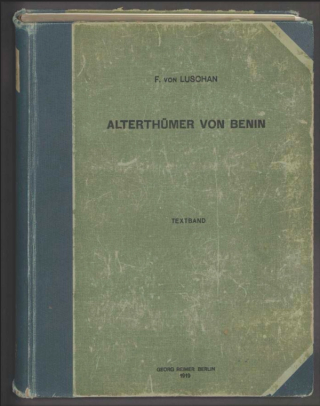
Museum Catalogue
Staatsbibliothek zu Berlin
Die Altertümer von Benin
Date
January 1, 1919 at 12:00:00 AM

Institution data

MARKK Museum am Rothenbaum Kulturen und Künste der Welt
The data was transferred directly by the institution.
Last updated: 2022-06-10
Languages: german, english
Institution fieldValue
Identifikationsnummer
object id
C 2897
Titel
designation
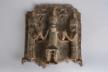
Bronzereliefplatte, König mit zwei Würdenträgern
Materialien
material
ANORGANISCH/Metall/Gelbguß
Heutiges Staatsgebiet des Herstellungsortes
production place
Afrika/Westafrika/Nigeria/Benin-Reich
Provenienz/Name
prior source
provenance
Lembcke
Provenienz Objektitinerar Akteure Orte Daten
provenance
John Lembcke
Provenienz/Affiliation
provenance
L. Pagenstecher & Co.
Provenienz/Country
provenance
Germany
Provenienz/Date of Birth
provenance
19.03.1873
Provenienz/Date of Death
provenance
unknown
Provenienz/First Name
provenance
John
Provenienz/No
provenance
25
Provenienz/Place of Birth
provenance
Provenienz/Place of Death
provenance
unknown
Provenienz/Profession
provenance
Merchant
Provenienz/Role-Function/0
provenance
Consignor
Provenienz/Role-Function/1
provenance
Provenienz/Sex
provenance
male
Provenienz/Short Biography
provenance
John Lembcke (1873-?) originally came from Mecklenburg and was a Hamburg merchant. He worked as an agent for the trading company L. Pagenstecher & Co. in southern Nigeria. The company maintained several branches in Cameroon and Nigeria and traded raw rubber, among other things.Lembcke was probably employed at a branch of the firm in Warri, from where he went to nearby Benin City. There, he found objects which he eventually brought to Hamburg. Between 1899 and 1905, he sold 40 objects from the Kingdom of Benin to the museum.
Provenienz/Street
provenance
Hammmerlandstr. 75 II (Address Mrs. C. Lembcke, widow)
Provenienz/Town
provenance
Hamburg
Hersteller kulturhist. Herkunftsgesellschaft
ethnic attribution
--/Edo
Heutiger Aufbewahrungsort Sammlung
department and institution
Museum am Rothenbaum. Kulturen und Künste der Welt (MARKK)
Akquisitionsdatum
accession date
1900
Alte Inventarnummer
Inventurdatum
23.07.2015
Label Text (deu)
Reliefplatte: König mit zwei Würdenträgern Unbekannte Werkstatt der Bronzegießergilde Igun Eronmwon / Königreich Benin, Nigeria, 16./17. Jh. / Gelbguss / Ankauf von John Lembcke, 1900, Inv. Nr. C 2897 Das Relief zeigt den Oba in Perlenornat zwischen zwei knienden Würdenträgern. Diese stützen ihn auf charakteristische Weise, die auch heute noch bei öffentlichen Auftritten praktiziert wird. Die Geste drückt aus, dass der König auf die Unterstützung des Volkes angewiesen ist. Der Oba trägt Leoparden-Gürtelanhänger, seine hochrangigen Begleiter solche mit Krokodilkopf. Im Hintergrund finden sich zwei Portugiesenköpfe mit federgeschmücktem Hut und verweisen auf die Handelsallianz.
Label Text (eng)
Relief Plaque: Oba with two Dignitaries Unidentified workshop of the Bronze Casters Guild Igun Eronmwon / Benin Kingdom, Nigeria, 16th/17th century / Brass / Acquired from John Lembcke, 1900, Inv. no. C 2897 This relief plaque shows the king Oba in his beaded regalia seated between two kneeling dignitaries. They support him in a characteristic way that is still practiced today during public appearances. The gesture expresses that the king depends on the support of the people. The Oba wears leopard belt pendants and his high-ranking attendants wear ones with crocodile heads. In the background, two Portuguese heads with feather-adorned hats reference the trade alliance.
Maße
Breite: 38,50 cm; Länge: 46,40 cm
Sensitive Content

Digital Benin collates digital material from institutions, and some of this material is inherently colonial and contains words, terms and phrases that are inaccurate, derogatory and harmful towards African and African diasporic communities. Catalogue transcriptions, book titles, exhibition titles and museum titles may contain harmful terms. We recognise the potential for the material to cause physical and mental distress as well as evoke strong emotions. Owing to the scale of the collection’s data, a process to implement sensitive-content warnings in the displayed data is still incomplete. The material within the catalogue does not represent Digital Benin’s views. Digital Benin maintains a strong anti-colonial, anti-racist position and affirms its support for centring the humanity of historically marginalised and disenfranchised communities. Read more about the background of this statement here