
Iconographies



Provenance
Institution data
| Institution field | Value |
|---|---|
Object Number object id | A210543 |
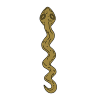
Collection Online Title designation | Carved wooden plaque showing a man spearing a snake |
Object Name designation | plaques |
Description description | Carved wooden plaque showing a man spearing a snake and holding the neck of an ostrich(?) in his left hand, African(?), 1850-1930 |
Description of object/0 description | SEAT TOP Carved wooden seat top, from chief's chair. Benin City, W.Africa. 26" x 11¾" |
Description of object/1 description | |
Description of object/2 description | |
Materials material | wood |
Measurements dimensions | length 662 mm; width 275 mm; thickness 23 mm |
Date Made date made | 1850-1930 |
Credit Line prior source | Wellcome Trust (Purchased from Stevens) |
Auction House provenance | |
Bought of / Acquisition/0 provenance | Details lost. |
Bought of / Acquisition/1 provenance | |
Bought of / Acquisition/2 provenance | |
Provenance provenance | Purchased by Sir Henry Wellcome's museum collection from Stevens auction house 5 August 1931 lot 211 |
Acquisition Date/0 accession date | |
Dispersal Notes notes | |
Legal Status legal status | LOAN: WELLCOME TRUST |
Digitised image direct link/0 images | https://wellcomecollection.org/works/q7tt49ve/items?sierraId=b18969598&canvas=449 |
Digitised image direct link/1 images | |
Digitised image direct link/2 images | |
Accession Number | A210543 |
Additional notes on flimsy/0 | |
Lot No. | |
New Registration (R Year) Number | |
Old Registration Number | |
Recipient | Sir Henry Wellcome's Museum Collection (Science Museum loan) |
Recipient Catalogue Record | https://collection.sciencemuseum.org.uk/objects/co105099/carved-wooden-plaque-showing-a-man-spearing-a-snak-plaques |
Wellcome archive reference/0 | WA/HMM/CM/Inv/A.221 |
Wellcome archive reference/1 | |
Wellcome archive reference/2 | |
Wellcome numbering |
| Institution field | Value |
|---|---|
accession number object id | A210543 |
name designation | |
summary_title designation object type | Carved wooden plaque showing a man spearing a snake (plaques) |
title designation | Carved wooden plaque showing a man spearing a snake |
materials material | |
measurements/dimensions dimensions | length 662 mm; width 275 mm; thickness 23 mm |
measurements/item_count object count | 1 |
dates date made | |
lifecycle/creation/date/earliest date made | 1850 |
lifecycle/creation/date/latest date made | 1930 |
lifecycle/creation/date/value date made | 1850-1930 |
lifecycle/creation/maker producer | |
lifecycle/creation/places_made production place | |
legal/credit_line prior source | |
note notes | |
multimedia/credit license | Science Museum Group |
multimedia/source/legal/rights/details license | © The Board of Trustees of the Science Museum |
multimedia/source/legal/rights/usage_terms license | CC-BY-NC-SA 4.0 |
multimedia/processed/large/format images | jpeg |
multimedia/processed/large/location images | https://coimages.sciencemuseumgroup.org.uk/images/397/132/large_SMG00059263.jpg |
multimedia/processed/large/measurements/dimensions/width images | 1536 pixel |
multimedia/processed/large/modified images | 1566250026000 |
multimedia/processed/large/type/0 images | image |
multimedia/processed/large_thumbnail/format images | jpeg |
multimedia/processed/large_thumbnail/location images | https://coimages.sciencemuseumgroup.org.uk/images/397/132/large_thumbnail_SMG00059263.jpg |
multimedia/processed/large_thumbnail/measurements/dimensions/height images | 243 pixel |
multimedia/processed/large_thumbnail/measurements/dimensions/width images | 320 pixel |
multimedia/processed/large_thumbnail/modified images | 1566250026000 |
multimedia/processed/large_thumbnail/type/0 images | image |
multimedia/processed/medium/format images | jpeg |
multimedia/processed/medium/location images | https://coimages.sciencemuseumgroup.org.uk/images/397/132/medium_SMG00059263.jpg |
multimedia/processed/medium/measurements/dimensions/height images | 576 pixel |
multimedia/processed/medium/measurements/dimensions/width images | 760 pixel |
multimedia/processed/medium/modified images | 1566250026000 |
multimedia/processed/medium/type/0 images | image |
multimedia/processed/medium_thumbnail/format images | jpeg |
multimedia/processed/medium_thumbnail/location images | https://coimages.sciencemuseumgroup.org.uk/images/397/132/medium_thumbnail_SMG00059263.jpg |
multimedia/processed/medium_thumbnail/measurements/dimensions/height images | 146 pixel |
multimedia/processed/medium_thumbnail/measurements/dimensions/width images | 192 pixel |
multimedia/processed/medium_thumbnail/modified images | 1566250026000 |
multimedia/processed/medium_thumbnail/type/0 images | image |
multimedia/processed/small_thumbnail/format images | jpeg |
multimedia/processed/small_thumbnail/location images | https://coimages.sciencemuseumgroup.org.uk/images/397/132/small_thumbnail_SMG00059263.jpg |
multimedia/processed/small_thumbnail/measurements/dimensions/height images | 48 pixel |
multimedia/processed/small_thumbnail/measurements/dimensions/width images | 63 pixel |
multimedia/processed/small_thumbnail/modified images | 1566250026000 |
multimedia/processed/small_thumbnail/type/0 images | image |
multimedia/processed/zoom/format images | IIIF |
multimedia/processed/zoom/location images | https://zoom.sciencemuseumgroup.org.uk/iiif/2/397%2F132%2FSMG00059263.ptif |
multimedia/processed/zoom/measurements/dimensions/width images | 5673 pixel |
multimedia/processed/zoom/modified images | 1566250026000 |
multimedia/processed/zoom/type/0 images | image |
multimedia/public_view images | 1 |
multimedia/publish images | 1 |
multimedia/source/title_caption images | Carved wooden plaque showing a man spearing a snake and holding |
multimedia/type/0 images | reference |
multimedia/type/1/base images | media |
multimedia/type/1/type/0 images | image |
links/api weblink | https://collection.sciencemuseumgroup.org.uk/api/objects/co105099 |
links/iiif weblink | https://collection.sciencemuseumgroup.org.uk/iiif/objects/co105099 |
links/root weblink | https://collection.sciencemuseumgroup.org.uk |
links/self weblink | https://collection.sciencemuseumgroup.org.uk/objects/co105099/carved-wooden-plaque-showing-a-man-spearing-a-snake-plaques |
categories/museum name | SCM - Ethnography and Folk Medicine |
description (accession register) | Carved wooden plaque showing a man spearing a snake and holding the neck of an ostrich(?) in his left hand, African(?), 1850-1930 |
id | co105099 |
language | eng |
lifecycle/collection/collector (literal)/name | Sir Henry Wellcome's Museum Collection |
multimedia/for_sale | 0 |
multimedia/iBase id | 397132 |
multimedia/priority | 0.5 |
multimedia/processed/large/measurements/dimensions/height | 1165 pixel |
multimedia/processed/zoom/measurements/dimensions/height | 4301 pixel |
multimedia/source/main title | Carved wooden plaque showing a man spearing a snake and holding the neck of an ostrich(?) in his left hand, African(?), |
name (subject heading)/0 | ethnography (african) |
name (subject heading)/1 | representation |
name (subject)/0 | ethnography (african) |
name (subject)/1 | plaques |
name (subject)/2 | representation |
name (subject)/3 | |
name (subject)/4 | |
numbers | 94 |
simple name | plaques |
type/0/base | object |
type/0/record_type | WHOLE |
Digital Benin collates digital material from institutions, and some of this material is inherently colonial and contains words, terms and phrases that are inaccurate, derogatory and harmful towards African and African diasporic communities. Catalogue transcriptions, book titles, exhibition titles and museum titles may contain harmful terms. We recognise the potential for the material to cause physical and mental distress as well as evoke strong emotions. Owing to the scale of the collection’s data, a process to implement sensitive-content warnings in the displayed data is still incomplete. The material within the catalogue does not represent Digital Benin’s views. Digital Benin maintains a strong anti-colonial, anti-racist position and affirms its support for centring the humanity of historically marginalised and disenfranchised communities. Read more about the background of this statement here