Ifẹnmwẹ

Ifẹnmwẹ

Description

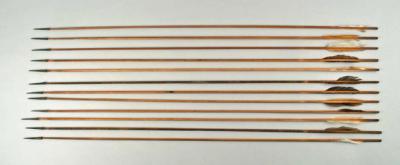
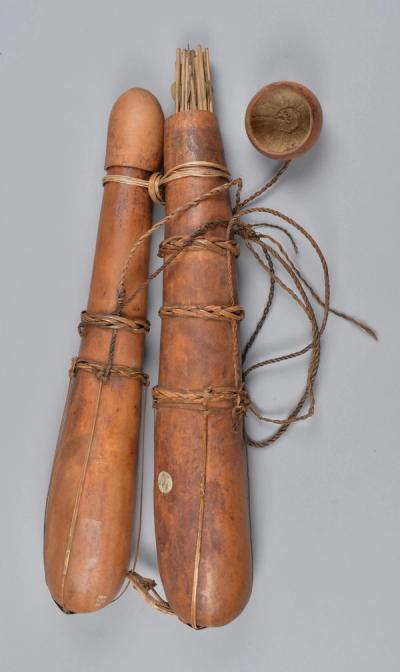
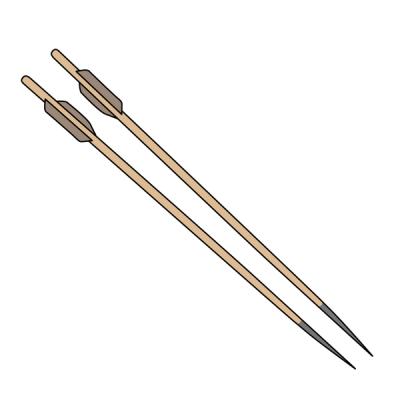
Ifẹnmwẹ (arrows) were usually used alongside Uhambọ and Ẹkpede. Ifẹnmwẹ were part of the weaponry used for hunting animals and during warfare. The shaft was a product of the Igbesamwan guild, and the tips were made by the Igun-Ematon. Ifẹnmwẹ tips could be dipped in poison made by the Ilobi, who still continue to make toxic substances.
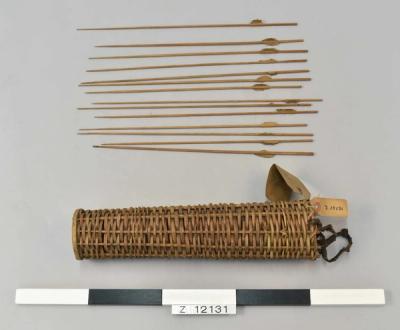
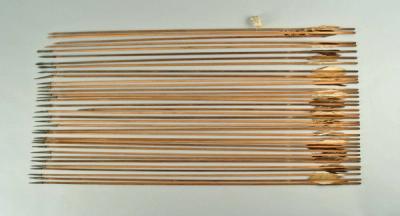
Objects defined as Ifẹnmwẹ

4 objects
See all
Arrow
Institution
Museum of Archaeology and Anthropology, University of Cambridge
idno
Z 12131.2-3
Edo designations
Ifẹnmwẹ
Arrow
Institution
British Museum
Registration number
Af1897,-.524.a-as
Edo designations
Ifẹnmwẹ
Arrow
Institution
British Museum
Registration number
Af1897,-.525.a-l
Edo designations
Ifẹnmwẹ
Arrow
Institution
British Museum
Registration number
Af1900,0720.21.a-af
Edo designations
Ifẹnmwẹ

Oral histories related to Ifẹnmwẹ

1 interviews
See all
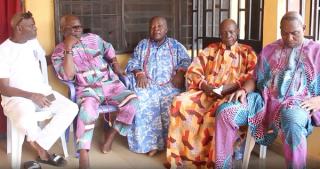
A group of men interviewed about Functions of Ewua N'ogbelaka in Benin Kingdom
Functions of Ewua N'ogbelaka in Benin Kingdom
Chief Palmer Enabulele, Chief Ẹfesọba, Chief Aibuẹdẹfe, Chief Idoluwayi, the Enekighidi

Archival documents related to Ifẹnmwẹ

5 documents
See all
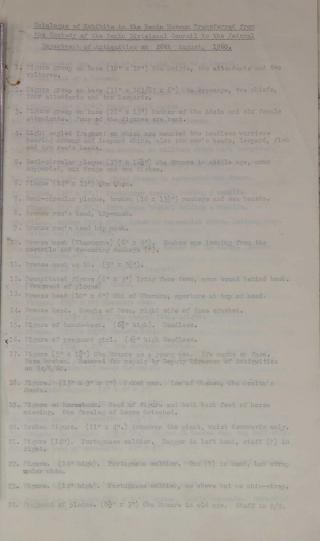
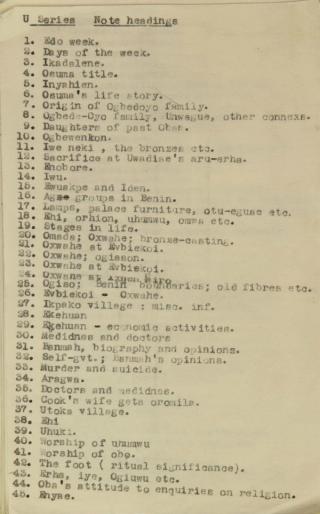
An archival document representing a Research notes of 49 page(s)
Research notesSketch
Cadbury Research Library, University of Birmingham
Papers of Robert Elwyn Bradbury
Date
August 26, 1960
An archival document representing a Research notes of 8 page(s)
Research notes
Cadbury Research Library, University of Birmingham
Papers of Robert Elwyn Bradbury
Date
July 8, 1953
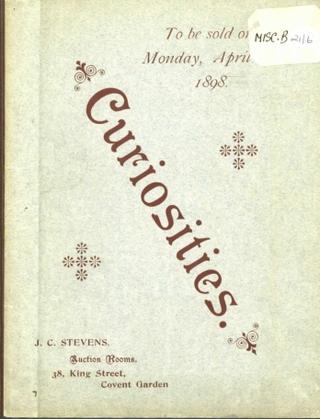
An archival document representing a Auction Catalog of 15 page(s)
Auction Catalogue
British Museum
J. C. Stevens Auction Catalogues
Date
April 4, 1898
An archival document representing a Sales Catalogs of 42 page(s)
Sales Catalogue
Wellcome Collection
Catalogue of ethnological specimens : European and Eastern arms & armour, Prehistoric and other curiosities / W.D. Webster, Oxford House, Bicester, Oxon., England.
Date
January 1, 1899 to December 31, 1899
Sensitive Content

Digital Benin collates digital material from institutions, and some of this material is inherently colonial and contains words, terms and phrases that are inaccurate, derogatory and harmful towards African and African diasporic communities. Catalogue transcriptions, book titles, exhibition titles and museum titles may contain harmful terms. We recognise the potential for the material to cause physical and mental distress as well as evoke strong emotions. Owing to the scale of the collection’s data, a process to implement sensitive-content warnings in the displayed data is still incomplete. The material within the catalogue does not represent Digital Benin’s views. Digital Benin maintains a strong anti-colonial, anti-racist position and affirms its support for centring the humanity of historically marginalised and disenfranchised communities. Read more about the background of this statement here